

Table of contents
- Who Was Crazy Horse?
- History of the Monument
- Native American History in South Dakota
- Why Hasn’t It Been Completed?
- What Caused Crazy Horse’s Death?
- Visitor Experience at Crazy Horse Memorial
- Comparing Crazy Horse Memorial to Other Monuments
- Conclusion
- Plan Your Black Hills Adventure with the Perfect Home Base
- Related Articles
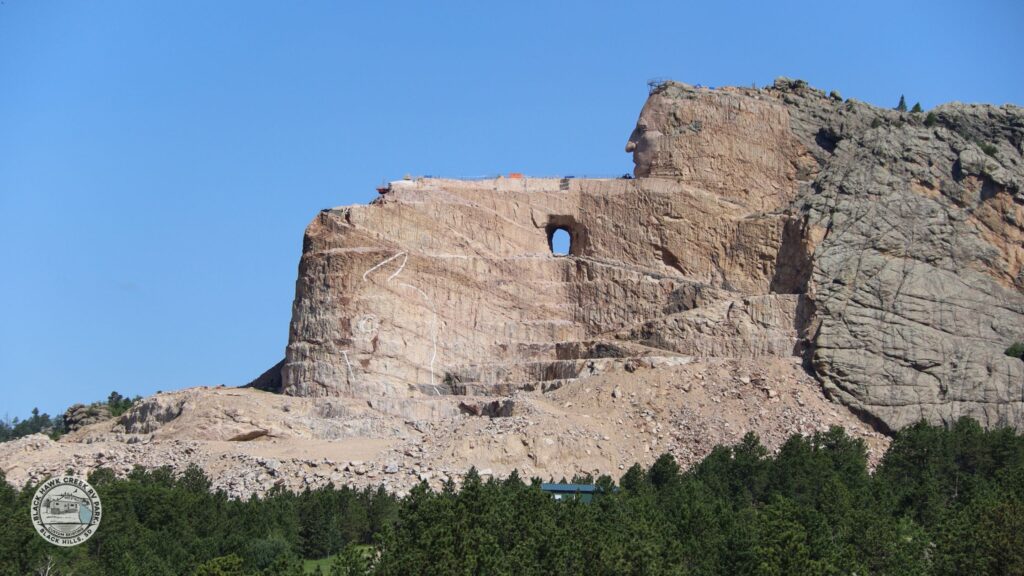
The Crazy Horse Monument stands as one of the world’s largest mountain carvings in progress, dramatically emerging from the Black Hills of South Dakota. This colossal sculpture honors the legendary Lakota leader Crazy Horse and represents a powerful tribute to Native American cultural heritage. Unlike its neighbor Mount Rushmore, the Crazy Horse Memorial is entirely privately funded, a project that began in 1948 and continues to evolve today. Located near Custer, South Dakota, this monumental undertaking answers the question of “where is the Crazy Horse Monument” for many curious travelers. The memorial is not merely a sculpture but a comprehensive cultural institution dedicated to preserving and celebrating Native American history. When completed, the Chief Crazy Horse Monument will dwarf most other sculptures worldwide, making it an awe-inspiring destination for visitors seeking to connect with America’s indigenous heritage.
Who Was Crazy Horse?
Before we can fully appreciate the magnitude of the Crazy Horse Memorial, it’s imperative to understand the man behind the monument – Crazy Horse himself. Born as Tȟašúŋke Witkó around 1840, Crazy Horse was a Lakota Sioux warrior and a prominent figure in the resistance against the encroachment of European settlers onto Native American lands. His legacy is intertwined with bravery, leadership, and a steadfast commitment to preserving his people’s way of life. His actions in battles like the Battle of Little Bighorn earned him a place of reverence among his people. By immortalizing Crazy Horse in a monumental sculpture, the creators of the memorial aim to honor his contributions to his tribe’s history and his relentless pursuit of freedom.
History of the Monument
The grandeur of the Crazy Horse Memorial is matched only by the magnitude of its purpose. The monument was initiated by Lakota Chief Henry Standing Bear, who, in 1939, wrote a letter to a sculptor named Korczak Ziolkowski. He implored Ziolkowski to carve a monument that would be a counterpoint to the faces of Mount Rushmore – a tribute to a Native American hero. The ambitious project began in 1948, and since then, it has evolved into a monumental work in progress. The primary focus of the sculpture is Crazy Horse mounted on his steed, pointing towards his ancestral lands. The dimensions of the monument are staggering; once completed, it will stand as the largest mountain carving in the world, a testament to the enduring legacy of Crazy Horse and his people.
Native American History in South Dakota
The story of the Crazy Horse Memorial is woven into the fabric of Native American history in South Dakota. The Black Hills, where the monument is located, are considered sacred by several Native American tribes, including the Lakota Sioux. These hills are not merely geographical landmarks; they hold deep spiritual significance. The memorial, situated in the heart of these hills, becomes a symbol of reclamation and resurgence. The history of the Native American tribes in South Dakota is one of struggle, survival, and cultural preservation in the face of adversity. The Crazy Horse Memorial, with its monumental presence, serves as a reminder of the enduring spirit of these communities.
Why Hasn’t It Been Completed?
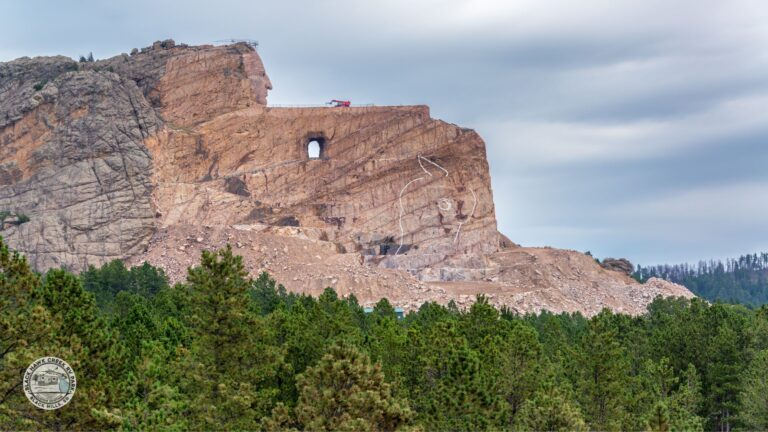
The completion of the Crazy Horse Memorial has been a subject of both curiosity and controversy. While the monument’s progress has been steady, it’s important to approach this topic without bias. The reasons behind the extended timeline are multifaceted. The scale of the project itself is enormous – from the intricate details of Crazy Horse’s likeness to the challenges of carving into a mountainside. Funding, too, plays a role. The project is largely supported by private donations and visitor contributions, which can lead to fluctuations in the pace of work. Additionally, the monument’s mission is to honor not only Crazy Horse but all Native Americans. This makes the decision-making process complex, as the sculptors and custodians strive to balance artistic integrity with cultural sensitivity.
Timeline and Progress
The timeline of the Chief Crazy Horse Monument reflects both the enormity of the task and the unwavering commitment to quality over speed. When Korczak Ziolkowski began work in 1948, he was a one-man operation with limited resources. He spent the first years building roads, stairs, and infrastructure before the first blast on the mountain occurred on June 3, 1948.
Significant milestones in the carving include:
- 1948: First blast on the mountain
- 1973: Completion of the 741-step staircase to the top of the mountain
- 1982: Focus shifted to the horse’s head after Korczak’s death
- 1998: Completion of Crazy Horse’s face
- 2009: Completion of the rough shape of the horse’s head
- 2023: Completion of the Left Hand
The deliberate pace of the work reflects the foundation’s philosophy that doing the job correctly is more important than doing it quickly. Current work focuses on the horse’s head and Crazy Horse’s outstretched arm, with plans to eventually complete the full figure as envisioned in the original design.
While no definitive completion date has been set, the project continues to make steady progress. Each advancement honors both the original vision of Chief Standing Bear and the artistic legacy of Korczak Ziolkowski while creating a lasting monument to Native American heritage.
What Caused Crazy Horse’s Death?
Crazy Horse met his demise on September 5, 1877, at Camp Robinson in present-day Nebraska. While the circumstances of his death have been a subject of historical debate, it is widely believed that it resulted from a tragic altercation between the warrior and U.S. soldiers. The exact details, however, remain elusive.
According to some accounts, Crazy Horse had surrendered to U.S. authorities at the time, hoping to secure a better future for his people. It’s said that during his surrender, a scuffle ensued between him and a soldier, during which a bayonet pierced his kidney. This injury proved fatal, leading to his untimely death at the age of approximately 36.
Other accounts suggest a different version of events, contending that Crazy Horse’s death was an assassination, a deliberate act to eliminate a symbol of Native American resistance. Regardless of the circumstances, his death marked the end of an era and the decline of the Lakota Sioux’s struggle to preserve their way of life.
Crazy Horse’s legacy lives on not only in the monumental sculpture of the Crazy Horse Memorial but also in the enduring spirit of Native American communities. His death, while shrouded in mystery, serves as a poignant reminder of the challenges and sacrifices faced by Native American leaders during a tumultuous period in American history.
Visitor Experience at Crazy Horse Memorial
Planning Your Visit
For travelers wondering where the Crazy Horse Monument is located, it can be found at 12151 Avenue of the Chiefs, Crazy Horse, SD 57730-8900, approximately 17 miles from Mount Rushmore. The memorial is open daily, with hours varying by season. During the peak summer months (May through October), the memorial welcomes visitors from 8:00 AM to 8:00 PM, with reduced hours during the winter season.
Admission fees support the ongoing work of the memorial, with various options available including standard admission, bus tours, and combination tickets. Current rates can be found on the memorial’s official website, with discounts available for military personnel and groups. Visitors should note that admission fees directly contribute to the carving project and educational programs rather than government funding.
The best times to visit depend on your interests and preferences. Summer offers the fullest range of programs and activities, including cultural performances and the chance to see carving work in progress. However, this is also the busiest season. Spring and fall provide more moderate crowds while still offering good weather and visibility. Winter visits offer a unique perspective on the memorial in a serene, snow-covered setting, though some activities may be limited.
Most visitors spend between two to four hours exploring the memorial complex, including viewing the mountain carving, visiting the museums, and attending cultural presentations. Those interested in taking specialized tours or participating in workshops may want to allocate additional time. When planning your visit to the crazy horse monument, checking the memorial’s event calendar can help you time your visit to coincide with special programs that interest you.
Viewing Options and Tours
Visitors to the Crazy Horse Memorial have several options for experiencing and viewing the mountain carving, each offering different perspectives and levels of access. The standard admission includes access to the Visitor Center complex with its viewing deck, providing an excellent vantage point for observing and photographing the carving. Powerful telescopes on the deck allow visitors to examine details of the work in progress.
For those seeking a closer experience, the memorial offers special tours that provide unique access to the mountain. The Face-to-Face Tour takes visitors to the base of the mountain directly below the carving, offering a dramatic perspective of the sculpture’s scale. During the summer months, the Evening Blast Viewing allows visitors to witness controlled explosions that are part of the carving process, creating a spectacular display as the mountain is illuminated.
The most exclusive option is the Volksmarch, held twice yearly, which allows participants to hike to the top of the mountain and stand on Crazy Horse’s outstretched arm. This rare opportunity provides an unparalleled view of both the carving and the surrounding Black Hills landscape.
The Laughing Water Restaurant within the Visitor Center complex offers panoramic views of the mountain while dining, allowing visitors to enjoy the changing light on the carving throughout the day. For those unable to visit in person, the memorial maintains live webcams that provide real-time views of the mountain carving, accessible through the official website.
Each viewing option offers a different perspective on this monumental work in progress, allowing visitors to appreciate both the artistic achievement and the engineering challenges involved in creating the world’s largest sculpture.
Amenities and Services
The Crazy Horse Memorial offers comprehensive amenities designed to ensure a comfortable and enriching visitor experience. The Visitor Center serves as the hub of activity, housing information desks, exhibit spaces, and educational displays that provide context for understanding the memorial’s significance.
The memorial’s gift shop features one of the region’s largest collections of Native American handcrafts, books, and artwork, alongside souvenirs related to the memorial itself. Many items are created by Native American artists, providing authentic cultural products while supporting indigenous artisans. Purchases from the gift shop directly support the memorial’s nonprofit mission.
Dining options include the Laughing Water Restaurant, which serves a variety of American and Native-inspired cuisine with panoramic views of the mountain. For quicker options, the Snack Shop offers sandwiches, snacks, and beverages that can be enjoyed at outdoor seating areas throughout the complex.
The memorial is committed to accessibility, with wheelchair-accessible pathways throughout most of the visitor areas, designated parking spaces, and elevator access to upper levels of the Visitor Center. Service animals are welcome throughout the complex, and staff members are available to assist visitors with special needs.
Ample parking accommodates cars, RVs, and tour buses, with designated areas for each vehicle type. Clean, well-maintained restroom facilities are available throughout the complex. For visitors traveling with children, family-friendly amenities include changing stations, a children’s activity area in the museum, and educational materials designed specifically for young visitors.
These comprehensive amenities ensure that visitors can focus on experiencing and learning from the Crazy Horse Monument without practical concerns detracting from their visit.
Comparing Crazy Horse Memorial to Other Monuments
Crazy Horse vs. Mount Rushmore
The proximity of the Crazy Horse Monument to Mount Rushmore (approximately 17 miles apart) naturally invites comparison between these two iconic Black Hills attractions. While both are mountain carvings that attract millions of visitors annually, they differ significantly in size, funding, historical context, and cultural significance.
In terms of scale, Crazy Horse dwarfs Mount Rushmore. When completed, the Crazy Horse Memorial will stand 563 feet high and 641 feet long, making it many times larger than the 60-foot faces of Mount Rushmore. This difference in scale reflects the ambitious vision behind the Crazy Horse project.
The funding models for these monuments represent contrasting approaches to public art. Mount Rushmore was primarily a government-funded project, authorized by Congress and receiving federal appropriations. In contrast, the Crazy Horse Memorial has remained steadfastly independent, relying entirely on private donations and visitor fees to fund its ongoing work.
Perhaps most significantly, these monuments represent different perspectives on American history. Mount Rushmore celebrates four U.S. presidents and conventional narratives of American achievement. The Chief Crazy Horse Monument, meanwhile, honors Native American heritage and provides a counterpoint to those narratives by recognizing indigenous leadership and resilience.
Many visitors choose to experience both monuments during their Black Hills trip, as they offer complementary perspectives on American history and identity. The drive between the two sites takes approximately 30-40 minutes, making it feasible to visit both in a single day. Together, they provide a more complete understanding of the complex historical and cultural landscape of the region.
Unique Aspects of Crazy Horse Memorial
What truly distinguishes the Crazy Horse Memorial from other monumental sculptures worldwide is its comprehensive approach to cultural preservation and education. Unlike many monuments that are primarily tourist attractions, Chief Crazy Horse functions as a multifaceted cultural institution with the mountain carving as its centerpiece.
The memorial’s status as a work in progress creates a unique visitor experience. Unlike completed monuments, Crazy Horse offers the opportunity to witness history in the making, with the carving process itself becoming part of the attraction. This ongoing creation invites visitors to return over the years to witness the sculpture’s evolution.
The educational mission integrated into every aspect of the memorial sets it apart from purely commemorative monuments. Through its museums, university programs, and cultural events, Crazy Horse actively works to preserve and promote Native American heritage rather than simply memorializing it.
Perhaps most distinctive is the way visitor contributions directly support both the carving and cultural preservation efforts. When visitors pay admission fees, purchase items in the gift shop, or make donations, they become active participants in the memorial’s mission rather than passive observers. This participatory model creates a sense of shared ownership and investment in the project’s success.
The combination of monumental sculpture, cultural center, educational institution, and living museum makes the Chief Crazy Horse Memorial unique among the world’s great monuments. It represents not just an artistic achievement but an ongoing commitment to cultural understanding and preservation.
Conclusion
The Chief Crazy Horse Monument stands as far more than a mountain carving in progress – it represents a multifaceted commitment to honoring, preserving, and advancing Native American heritage. From its origins in Chief Henry Standing Bear’s vision to its current status as a comprehensive cultural institution, the memorial embodies the resilience and enduring significance of indigenous cultures in America.
As an artistic achievement, the scale and ambition of the Crazy Horse Memorial are unparalleled. When completed, it will rank among humanity’s greatest sculptural accomplishments, transforming a mountain into a powerful symbol visible for miles across the Black Hills landscape. Yet its significance extends far beyond its physical dimensions.
Through its museums, educational programs, cultural events, and university initiatives, the memorial actively works to preserve Native American traditions while creating opportunities for indigenous peoples today. This living mission ensures that the Crazy Horse Memorial remains relevant and vital, not merely commemorating the past but helping to shape a more inclusive future.
For visitors, the memorial offers a unique opportunity to witness history in the making and to participate directly in a project of profound cultural significance. Each person who visits the chief crazy horse monument becomes part of its ongoing story, contributing to both the physical carving and the broader mission of cultural understanding and preservation.
As the carving continues to emerge from the mountain, the Crazy Horse Memorial will remain a powerful testament to Native American heritage and a reminder that America’s story is incomplete without recognition of indigenous perspectives and contributions. It invites all who visit to consider not just what has been carved from the mountain, but what has been inscribed in our collective understanding of American history and identity.
Plan Your Black Hills Adventure with the Perfect Home Base
When planning your visit to the Crazy Horse Monument and other Black Hills attractions, choosing the right accommodation can enhance your entire experience. Located just 2 miles from the interstate and only 5 minutes from Rapid City, Black Hawk Creek RV Park & Cabins offers the ideal base for your South Dakota adventure.
This year-round destination provides a range of accommodations to suit every traveler, from spacious RV sites to cozy cabins. What makes Black Hawk Creek particularly special is its strategic location – you’re within easy driving distance of all the region’s iconic attractions, including Mount Rushmore (46 minutes), Crazy Horse Memorial (1 hour), Custer State Park (1 hour), Badlands National Park (50 minutes), and the historic Wild West town of Deadwood (40 minutes).
After days spent exploring these magnificent landmarks, you’ll appreciate returning to the comfort and convenience of Black Hawk Creek. With its peaceful setting and modern amenities, it’s the perfect place to relax and recharge for your next day of adventure. For those planning an extended road trip, the park offers excellent facilities for both short and long-term stays.
Don’t leave your Black Hills accommodation to chance – book your stay at Black Hawk Creek RV Park & Cabins today and ensure your South Dakota adventure has the perfect home base.