

Table of contents
South Dakota’s landscape is adorned with some of America’s most iconic and awe-inspiring monuments. From massive mountain carvings to intimate memorials, these South Dakota monuments tell compelling stories of the state’s rich cultural heritage and historical significance. Whether you’re planning a family vacation or are a history enthusiast, the landmarks in South Dakota offer profound insights into both American and Native American history. This comprehensive guide explores the most significant national monuments in South Dakota, providing historical context and practical visiting information to help you plan an unforgettable journey through the Mount Rushmore State.
Mount Rushmore National Memorial
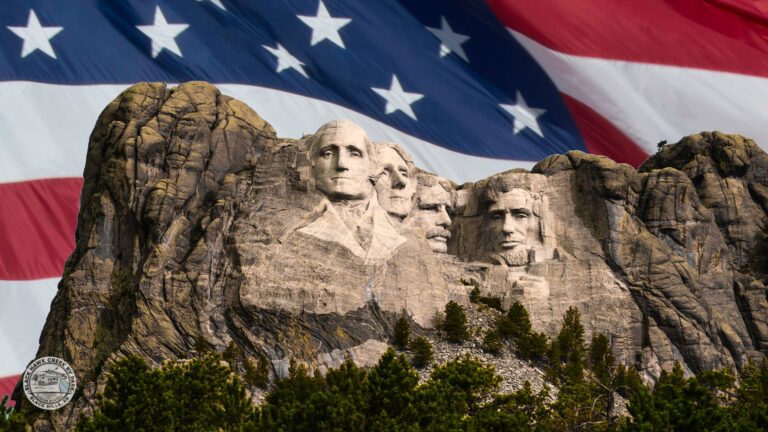
Mount Rushmore stands as the most recognizable of all South Dakota landmarks, drawing nearly three million visitors annually to the Black Hills near Keystone. This colossal sculpture features the 60-foot faces of four American presidents—George Washington, Thomas Jefferson, Theodore Roosevelt, and Abraham Lincoln—carved into the granite mountainside.
The monument was conceived in 1923 by South Dakota historian Doane Robinson, who envisioned a grand attraction that would draw tourists to the state. Sculptor Gutzon Borglum designed and executed the project, which began in 1927 and continued until his death in 1941, after which his son Lincoln briefly took over before completion.
The construction process was remarkable for its time, combining traditional sculpting techniques with industrial methods. Workers used dynamite to remove approximately 450,000 tons of rock, followed by more precise work with pneumatic hammers to create the detailed presidential features.
Beyond its impressive scale, Mount Rushmore symbolizes American democracy and presidential leadership. Each president was chosen deliberately: Washington representing the nation’s birth, Jefferson for growth, Roosevelt for development, and Lincoln for preservation.
Visitors can enjoy the Lincoln Borglum Visitor Center with its museum exhibits, walk the Presidential Trail for closer views, and experience the Avenue of Flags representing all U.S. states and territories. The evening lighting ceremony, held from late May through September, offers a particularly moving experience as the monument illuminates against the night sky.
For the best experience, arrive early in the morning to avoid crowds, especially during the summer months. If you’re planning a road trip to national parks, Mount Rushmore should be at the top of your South Dakota itinerary.
Trail of Governors
One of the most unique South Dakota monuments is the Trail of Governors in Pierre, which features life-sized bronze statues of past South Dakota governors placed along a walking path from the State Capitol to downtown. This innovative public art project began in 2011, with new statues added annually until all former governors are represented.
As of 2023, more than 30 statues have been installed, each capturing the personality and era of the governor it represents. The statues are created by South Dakota artists, including Lee Leuning, Sherri Treeby, James Michael Maher, and John Lopez, ensuring that the project supports local artistic talent.
The Trail of Governors Foundation, a non-profit organization, funds the project entirely through private donations, making it a true community effort. Each statue costs approximately $68,000 and is designed to withstand South Dakota’s variable climate for generations.
This open-air gallery offers an engaging way to learn about South Dakota’s political history. Visitors can follow a self-guided tour using maps available at the Capitol or download the information from the Trail of Governors website. The complete trail takes approximately 1-2 hours to walk, depending on how much time you spend reading about each governor.
For visitors planning a road trip through South Dakota Landmarks, the Trail of Governors offers an educational and entertaining break that combines history, art, and outdoor activity.
Crazy Horse Memorial
Just 17 miles from Mount Rushmore stands another monumental mountain carving that represents a different but equally important aspect of American history. The Crazy Horse Memorial honors Native American heritage and, when completed, will be the world’s largest mountain sculpture at 563 feet high and 641 feet long.
This ambitious project began in 1948 through collaboration between Lakota Chief Henry Standing Bear and sculptor Korczak Ziolkowski. Chief Standing Bear wanted a monument that showed “the white man that the red man had heroes too.” Unlike Mount Rushmore, this memorial takes no government funding, operating entirely on admission fees and donations.
The memorial remains a work in progress, with the face of Crazy Horse completed in 1998. The Ziolkowski family continues the work after Korczak’s death in 1982, maintaining his vision and determination. When finished, the sculpture will depict the Oglala Lakota warrior mounted on his horse, pointing to the lands where his people lie buried.
Visitors can explore the Welcome Center, The Indian Museum of North America, and the Native American Educational and Cultural Center. The complex regularly hosts cultural presentations, including traditional dances and craft demonstrations that provide deeper insights into Native American traditions.
The monument stands as a powerful tribute to Native American culture and Chief Crazy Horse’s legacy of resistance and dignity. For those traveling through South Dakota, witnessing this ongoing sculptural achievement offers a profound counterpoint to Mount Rushmore’s narrative.
Dignity: Of Earth and Sky
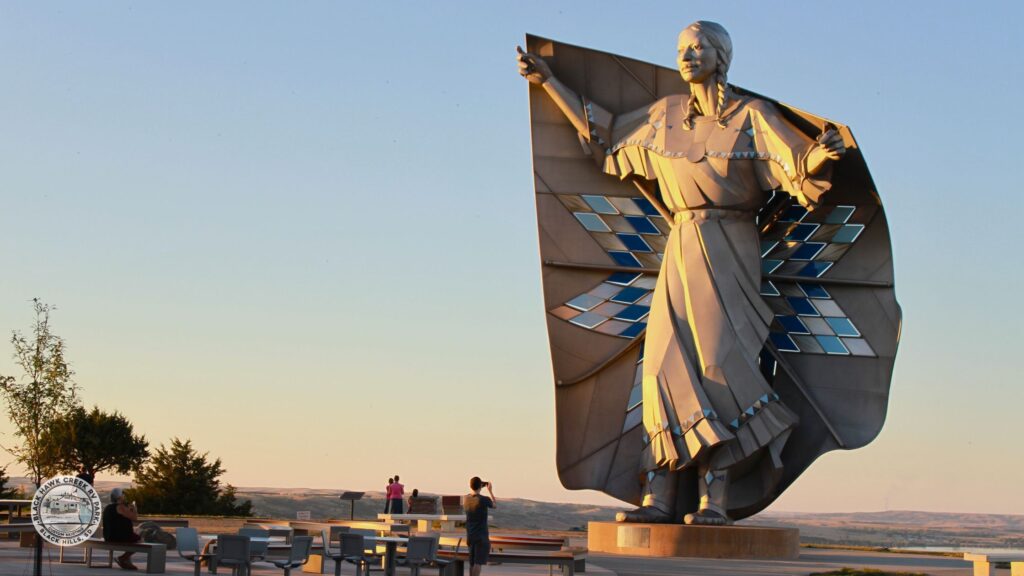
One of the newer and most striking South Dakota monuments is “Dignity: of Earth and Sky,” a 50-foot stainless steel statue overlooking the Missouri River near Chamberlain. Installed in 2016 to commemorate South Dakota’s 125th anniversary of statehood, this impressive sculpture was designed by South Dakota artist Dale Lamphere.
The statue depicts a Native American woman in traditional Lakota dress, holding a star quilt that unfurls behind her. The quilt contains 128 diamond-shaped blue steel tiles that move independently in the wind and catch the light, creating a shimmering effect. At night, LED lights illuminate these diamonds, making the monument visible from great distances.
“Dignity” honors Lakota and Dakota culture, particularly celebrating the strength and resilience of Native American women. The young woman’s face gazes over the river with a serene expression, representing the dignity of the indigenous peoples of the Plains.
The monument is easily accessible from Interstate 90 at the Chamberlain rest area, making it a perfect stopping point for travelers crossing the state. The viewing area offers spectacular vistas of the Missouri River valley and informational plaques that explain the statue’s significance. For photographers, the monument is particularly stunning at sunrise and sunset when the light plays across the metallic surface.
If you’re planning an RV trip through South Dakota Landmarks, this monument provides both a meaningful cultural experience and a welcome break from driving.
Sitting Bull Monument
Overlooking the Missouri River from a bluff 7 miles southwest of Mobridge stands the Sitting Bull Monument, another significant landmark in South Dakota’s cultural landscape. Created by sculptor Korczak Ziolkowski (the same artist who began the Crazy Horse Memorial), this monument honors one of the most important Native American leaders in American history.
The monument features a stone bust of Sitting Bull set against the backdrop of Lake Oahe, created when the Missouri River was dammed. The location is believed by many to be Sitting Bull’s final resting place, though this remains a subject of historical debate and controversy.
Sitting Bull was a Hunkpapa Lakota leader and holy man who led his people during years of resistance to United States government policies. He is perhaps best known for his role in the victory at the Battle of the Little Bighorn in 1876. His life story embodies the struggle of Native Americans to maintain their sovereignty and way of life in the face of westward expansion.
The site offers spectacular views of the Missouri River valley and serves as a place of reflection on the complex history of Native American-U.S. relations. Visitors should approach the site with respect, as it holds deep cultural significance for many Native Americans.
To reach the monument, follow Highway 1806 south from Mobridge. The site is accessible year-round, though winter visits may be challenging due to weather conditions. Combining this visit with the nearby Sakakawea Monument makes for a meaningful exploration of Native American history in the region.
South Dakota Veterans Memorial
The South Dakota Veterans Memorial, located on the State Capitol grounds in Pierre, honors the service and sacrifice of South Dakotans who served in America’s armed conflicts. This comprehensive memorial includes separate monuments for different wars, creating a powerful space for remembrance and reflection.
The memorial features distinct sections dedicated to World War II, the Korean War, and the Vietnam War, each with unique design elements that reflect the nature of those conflicts. The World War II memorial includes granite panels listing the names of South Dakotans who died in service, while the Korean War memorial features a bronze statue of a soldier. The Vietnam memorial includes a wall similar to the national Vietnam Veterans Memorial in Washington, D.C.
These national monuments in South Dakota collectively tell the story of the state’s contributions to American military history and the personal sacrifices made by its citizens. The memorial serves as a gathering place for ceremonies on Veterans Day and Memorial Day, when the site comes alive with remembrance activities.
Visitors will find the memorial easily accessible on the northeast corner of the capitol grounds. Informational plaques provide historical context for each conflict and explain South Dakota’s involvement. The site is open year-round, with ample parking available nearby.
For those interested in military history or those with family connections to service members, this memorial offers a meaningful opportunity to honor veterans’ contributions and sacrifices.
Walleye Up Statue
In downtown Mobridge stands one of South Dakota’s most whimsical monuments—the Walleye Up statue. Created by renowned South Dakota artist John Lopez, this unique sculpture celebrates the state’s fishing heritage and the importance of the walleye, South Dakota’s state fish.
What makes this monument particularly special is its construction method. Lopez created it using scrap metal, transforming discarded farm equipment, tools, and other metal objects into a dynamic artistic representation. The sculpture depicts a massive walleye leaping from the water, capturing the excitement of fishing on Lake Oahe, a premier walleye fishing destination.
The artist, John Lopez, has gained national recognition for his scrap metal sculptures that dot the South Dakota landscape. His work combines Western themes with industrial materials, creating a distinctive style that honors the state’s agricultural and outdoor heritage.
For visitors, the Walleye Up statue offers a perfect photo opportunity and represents Mobridge’s identity as a fishing destination. The monument is located in the heart of downtown, making it easily accessible for travelers passing through the area.
Fishing enthusiasts planning their South Dakota adventures will appreciate this artistic tribute to their sport, while art lovers will value seeing Lopez’s innovative approach to sculpture. If you’re traveling with your RV through this region, Mobridge makes for a charming stop, adding a unique cultural highlight to the many national monuments in South Dakota.
Bear Butte State Park Monument
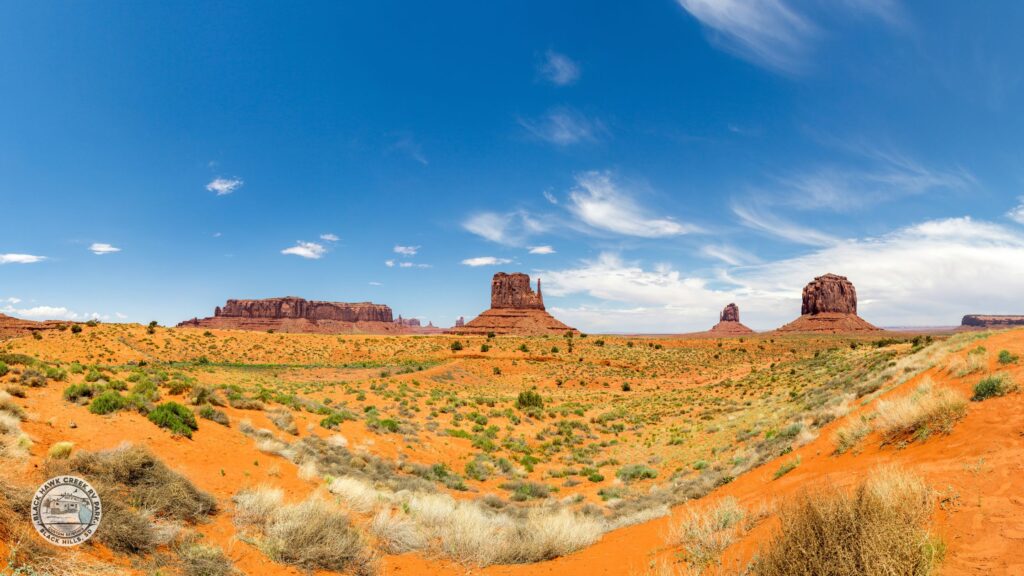
Rising 1,253 feet above the surrounding plains near Sturgis, Bear Butte stands as both a natural monument and a sacred site for many Native American tribes. This distinctive geological formation, known as Mato Paha (Bear Mountain) to the Lakota and Noahvose to the Cheyenne, has served as a spiritual center for Plains tribes for thousands of years.
Geologically, Bear Butte is a laccolith—an igneous intrusion that pushed up through sedimentary rock layers about 60 million years ago but never erupted as a volcano. This process created the distinctive butte that dominates the landscape today.
The site’s spiritual significance cannot be overstated. It continues to serve as a place of prayer, meditation, vision quests, and religious ceremonies for many Native American peoples. Visitors may notice colorful prayer cloths and tobacco ties attached to trees along the trails—these are sacred offerings and should never be disturbed or photographed.
Bear Butte State Park offers a 1.8-mile trail to the summit, providing spectacular views of the Black Hills and the vast plains. The park also features an education center that explains both the geological formation and cultural significance of the butte.
When visiting this sacred site, proper etiquette is essential. Visitors should stay on designated trails, speak quietly, and never remove or disturb any offerings. Photography of sacred objects or ceremonies is prohibited without permission.
For those exploring the national parks and monuments of South Dakota, Bear Butte offers a profound experience that connects natural beauty with deep cultural heritage.
Badlands National Park Monuments
While not traditional monuments in the sense of human-made structures, the striking geological formations of Badlands National Park represent some of South Dakota’s most impressive natural monuments and landmarks. These otherworldly landscapes have been sculpted by erosion over millions of years, creating a terrain that seems almost alien in its beauty.
The park features several named formations that stand as natural monuments to geological processes. The Yellow Mounds area showcases ancient fossil soils that have been transformed into vibrant yellow, red, and orange bands. The Fossil Exhibit Trail displays replicas of extinct creatures that once roamed this area, including ancient rhinos, horses, and saber-toothed cats. The Wall, a 100-mile-long eroded escarpment, dramatically divides the upper and lower prairies.
The Badlands hold tremendous paleontological significance as one of the world’s richest fossil beds from the Oligocene Epoch. Scientists continue to discover remains of ancient mammals in these layers of sedimentary rock.
For the Lakota people, this area known as “mako sica” or “land bad” has cultural and historical importance. It served as both a hunting ground and a place of refuge during conflicts with the U.S. government in the late 19th century.
Visitors can experience these natural monuments via the 31-mile Badlands Loop Road (Highway 240), which offers numerous overlooks and trailheads. The Ben Reifel Visitor Center provides educational exhibits about the park’s geology, paleontology, and human history.
Dawn and dusk offer the most dramatic lighting for photography, when the angled sunlight accentuates the formations’ textures and colors. For those planning an RV camping trip, the park’s Cedar Pass Campground accommodates RVs and provides a perfect base for exploration.
Conclusion
South Dakota’s monuments tell a multifaceted story of American and Native American history, natural wonders, and artistic achievement. From the iconic presidential faces of Mount Rushmore to the ongoing cultural statement of the Crazy Horse Memorial, from the dignified presence of the Dignity statue to the sacred spaces of Bear Butte, these South Dakota monuments collectively represent the complex tapestry of the state’s heritage.
These landmarks in South Dakota offer visitors more than just photo opportunities—they provide windows into the values, struggles, achievements, and spiritual beliefs that have shaped this region. The national monuments in South Dakota stand as testaments to both human creativity and natural forces, inviting contemplation of our shared past and diverse perspectives.
When planning your monument tour, consider an itinerary that balances the famous sites with lesser-known treasures. Begin in Rapid City with Mount Rushmore and Crazy Horse, then travel east to experience Dignity near Chamberlain. Continue to Pierre for the capitol monuments before heading north to Mobridge for the Sitting Bull and Sakakawea Monuments. Complete your journey with the natural monuments of Bear Butte and the Badlands.
Remember that many of these sites, particularly those with Native American significance, deserve special respect. Observe posted guidelines, stay on designated paths, and approach sacred sites with appropriate reverence.
South Dakota’s monuments await your discovery, each with stories to tell and perspectives to share about the land and its people. Through these impressive landmarks, visitors gain a deeper appreciation for the forces—both human and natural—that have shaped this remarkable state.
Your Base Camp for South Dakota Monument Exploration
Planning to explore the magnificent South Dakota monuments? Make Black Hawk Creek RV Park & Cabins your ideal home base for your adventure. Located just 2 miles from the interstate and only 5 minutes from Rapid City, our year-round facility offers the perfect launching point for your monument tour.
With Mount Rushmore just 46 minutes away, Crazy Horse Memorial an hour’s drive, and the Badlands National Park only 50 minutes from our location, you’ll have convenient access to South Dakota’s most iconic landmarks. Our comfortable accommodations range from spacious RV sites to cozy cabins, suitable for both short visits and extended stays.
After days filled with monument exploration, return to our peaceful grounds to relax and plan your next day’s adventures. Whether you’re traveling solo, as a couple, or with family, Black Hawk Creek RV Park provides the perfect blend of comfort, convenience, and natural beauty.
Book your stay today and position yourself at the heart of South Dakota’s monumental wonders!