


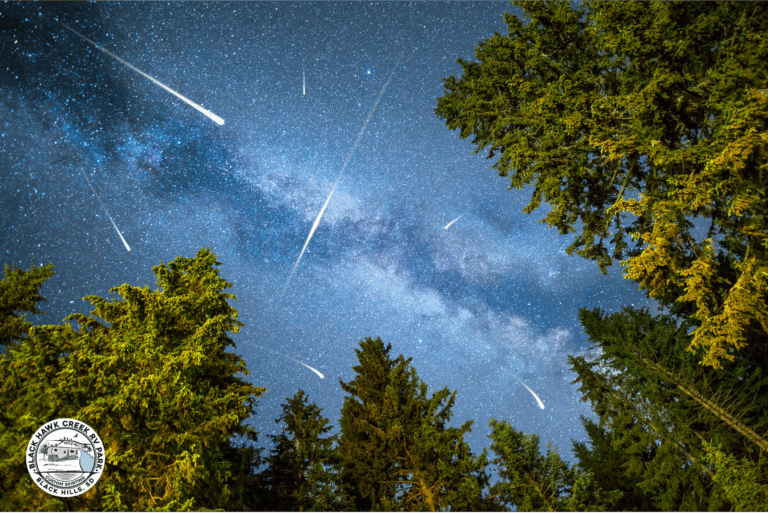
The Sky’s Grandest Dance Returns — The Perseids Are Here
Often called “the best meteor shower of the year,” the Perseids are born from the ancient dust trail of Comet Swift–Tuttle. As Earth crosses its path, tiny fragments hit our atmosphere at 37 miles per second, igniting into fast, glowing trails — and, if you’re lucky, a few spectacular fireballs.
The Moon
Yes, the moon will compete this year. The nearly full Sturgeon Moon (84% brightness) will rise early and wash out fainter meteors — but the brighter ones? They’ll still blaze defiantly through the glow. Under dark skies, expect 50–100 meteors per hour during peak time.
Best time to watch?
After midnight, before dawn — when the constellation Perseus climbs high and the show reaches full strength.
Perseids Won’t Be Alone
Tips for a Magical Experience
- Escape city lights — choose a rural or high-altitude spot
- Bring a blanket, lie back, and give your eyes 30 minutes to adjust
- No need for gear — just look up and take it all in
This is more than a meteor shower — it’s a cosmic tradition that has lit up human skies for over two millennia.