

Table of contents
- The Vision and Scale of Crazy Horse Memorial
- Historical Background and Origins
- Funding Challenges: The Price of Independence
- Technical and Engineering Challenges
- Workforce Limitations
- Progress to Date: What Has Been Accomplished
- Beyond the Carving: The Expanded Mission
- Controversies and Differing Perspectives
- Future Projections: Will It Ever Be Completed?
- Visitor Experience at an Unfinished Monument
- Conclusion
- Plan Your Visit to Crazy Horse and the Black Hills
- Related Articles
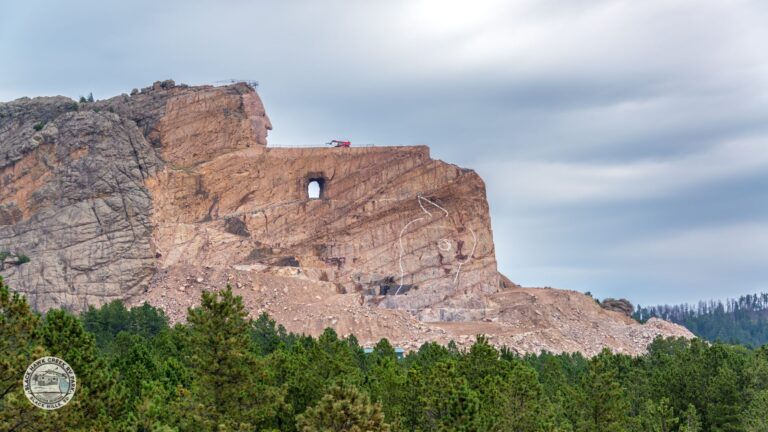
Standing in the Black Hills of South Dakota, visitors often gaze in awe at the partially carved face of Crazy Horse and wonder why it is taking so long to finish Crazy Horse Monument. Since breaking ground in 1948, the monument has been under construction for over 70 years, with only about 10% completed. Many tourists ask when will the Crazy Horse Monument be finished, but there’s no definitive Crazy Horse Monument completion date. For those questioning is the Crazy Horse Monument finished, the answer is a clear no, and the reasons behind this monumental delay involve a complex mix of funding challenges, technical difficulties, and an evolving mission that extends far beyond simply getting Crazy Horse finished.
The Vision and Scale of Crazy Horse Memorial
The sheer magnitude of the Crazy Horse Memorial project is the first major factor in why is it taking so long to finish Crazy Horse Monument. When completed, this colossal sculpture will stand 563 feet high and 641 feet long, making it the world’s second-largest sculpture. To put this in perspective, the four presidential faces at Mount Rushmore could fit within just the head of Crazy Horse, which alone measures 87×58 feet. While many visitors wonder about the Crazy Horse Monument completion date, the scale of the project explains why progress has been gradual and ongoing for decades.
The complete vision depicts the Lakota warrior mounted on his horse, pointing toward the horizon with the inscription, “My lands are where my dead lie buried.” This ambitious design requires removing millions of tons of granite from Thunderhead Mountain, a task that dwarfs most monument projects in human history.
Unlike Mount Rushmore, which focused on carving four faces into a mountainside, the Crazy Horse Memorial involves creating a three-dimensional sculpture that emerges from the mountain. This includes fully detached elements like the extended arm and the horse’s head, presenting engineering challenges that simply didn’t exist for other famous monuments.
The scale alone would justify a lengthy timeline, but as we’ll see, it’s just one of many factors contributing to why is it taking so long to finish Crazy Horse Monument.
Historical Background and Origins
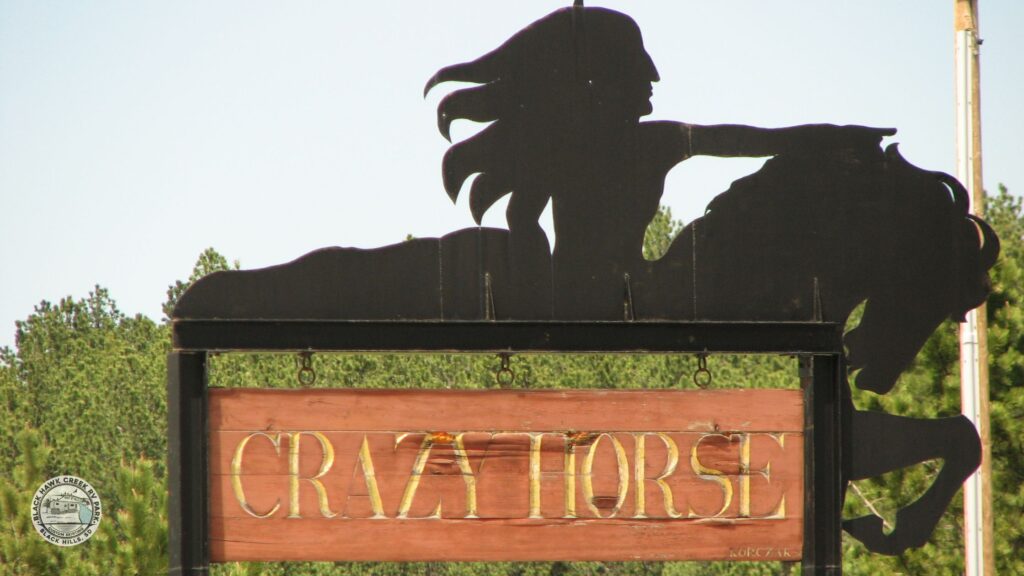
The story behind the Crazy Horse Memorial begins in 1939 when Lakota Chief Henry Standing Bear wrote to sculptor Korczak Ziolkowski, inviting him to create a monument honoring Native American heritage. Standing Bear wanted to show that “the red man has great heroes also,” particularly in response to Mount Rushmore, which had been carved into mountains the Lakota considered sacred.
Ziolkowski, who had briefly worked with Gutzon Borglum on Mount Rushmore, accepted the challenge after serving in World War II. He arrived at the site in 1947, and the first blast on the mountain occurred on June 3, 1948. From the beginning, Ziolkowski made a crucial decision that would significantly impact the timeline: he refused all government funding to maintain complete artistic and cultural independence.
For many years, Ziolkowski worked virtually alone, living in a tent at the base of the mountain. He built his own roads, installed power lines, and created the infrastructure needed for the massive project. His dedication was absolute—he even turned down a $10 million federal grant that came with strings attached, preferring to maintain the project’s independence.
This historical context is essential to understanding why it is taking so long to finish Crazy Horse Monument. The decision to remain independent from government oversight and funding established a pattern that continues to this day, with profound implications for the pace of progress.
Funding Challenges: The Price of Independence
Perhaps the most significant factor in why is it taking so long to finish Crazy Horse Monument is its unique funding model. Unlike Mount Rushmore and other national monuments that received substantial government funding, Crazy Horse relies entirely on private sources—primarily admission fees, donations, and gift shop purchases.
This financial independence preserves the artistic and cultural integrity of the project but dramatically limits the resources available for construction. While Mount Rushmore was completed in 14 years with federal backing, Crazy Horse must generate its own operating budget before any carving can take place.
The Crazy Horse Memorial Foundation must divide its limited funds between three major initiatives:
- The mountain carving itself
- The Indian Museum of North America
- The Indian University of North America
This division of resources means that only a portion of the foundation’s annual budget goes toward actual carving operations. In some years, when visitor numbers drop or unexpected expenses arise, progress on the mountain may slow significantly or even temporarily halt.
The foundation has explored various fundraising initiatives over the decades, but has remained steadfast in its commitment to refusing government money. This principled stance is admirable but is undoubtedly a major reason why the Crazy Horse Monument completion date remains uncertain and why it is taking so long to finish Crazy Horse Monument.
Technical and Engineering Challenges
Carving a mountain is not simply a matter of scaling up traditional sculpture techniques. The technical challenges involved in the Crazy Horse project represent another crucial factor in why it is taking so long to finish Crazy Horse Monument.
The granite of Thunderhead Mountain presents numerous natural seams, cracks, and varying mineral compositions that complicate the carving process. Engineers must constantly assess the structural integrity of the mountain and adapt their approach based on what they discover as work progresses.
Modern technology has improved the process over the decades. The project now employs:
- Laser measuring systems for precision
- Computer modeling to plan blasts
- Specialized drilling equipment
- Controlled explosives for rough shaping
However, even with these advancements, each section requires careful planning and execution. A miscalculation could damage completed work or create structural problems that might compromise the entire monument.
Weather conditions in South Dakota further complicate matters. The harsh winters limit outdoor work to approximately seven months each year. Extreme temperature fluctuations can cause the granite to expand and contract, potentially creating new cracks or widening existing ones.
These technical challenges have necessitated changes to the original design over the years. Engineers have had to adapt Ziolkowski’s initial model to account for the mountain’s natural features and structural requirements, adding another layer of complexity to an already monumental task.
Workforce Limitations
Unlike government-funded projects that can employ large teams of workers, the Crazy Horse Memorial has historically operated with a surprisingly small workforce—sometimes fewer than 10 people actively working on the carving itself. This limited human resource is another significant factor in why it is taking so long to finish Crazy Horse Monument.
After Korczak Ziolkowski’s death in 1982, his wife Ruth took over leadership of the project. Seven of their ten children eventually joined the effort, continuing their father’s legacy. This family commitment has provided continuity but hasn’t substantially increased the pace of work.
Finding skilled workers for such specialized carving and engineering work presents another challenge, especially in a relatively remote location. The unique skills required—from operating specialized drilling equipment to understanding the geological properties of granite—aren’t widely available in the local workforce.
Additionally, the small team must divide their time between:
- Actual mountain carving
- Maintenance of existing work
- Supporting tourist operations that fund the project
- Educational programs and museum development
This division of labor means that on any given day, only a fraction of the already small workforce might be engaged in advancing the carving itself, further explaining why it is taking so long to finish Crazy Horse Monument.
Progress to Date: What Has Been Accomplished
Despite the challenges, significant progress has been made on the Crazy Horse Memorial over its seven-decade history. Understanding what has been accomplished helps put into perspective why it is taking so long to finish Crazy Horse Monument.
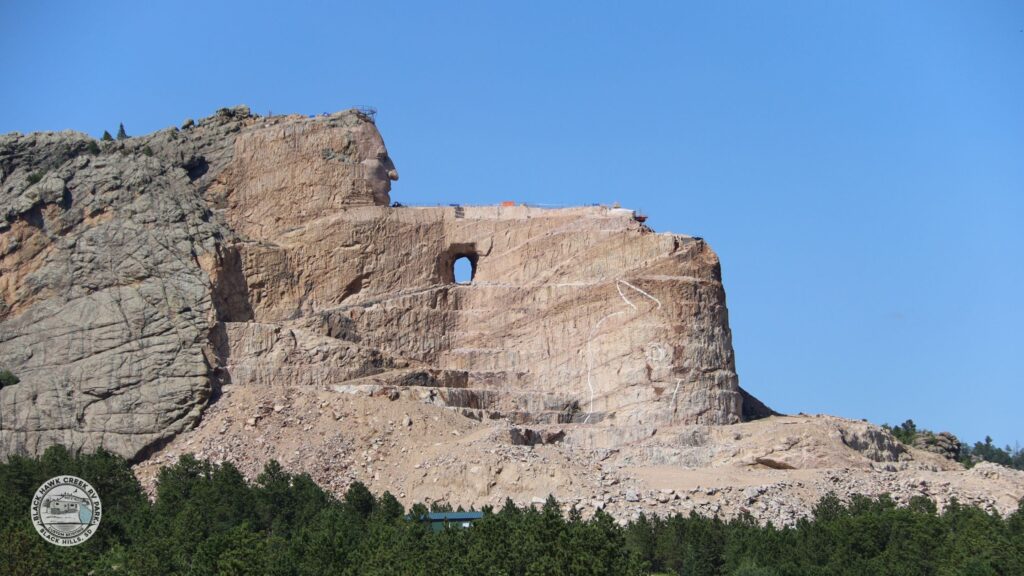
The most visible achievement came in 1998—50 years after the first blast—when the 87-foot-tall face of Crazy Horse was completed. This milestone represented decades of painstaking work and stands as the most recognizable feature of the monument today.
Current efforts are focused on carving:
- The left hand and arm
- The horse’s mane and head
- Defining the hairline of Crazy Horse
By most estimates, only about 10% of the total planned monument has been completed after more than 70 years of work. While this might seem discouragingly slow, it reflects the reality of the project’s scale, funding model, and technical challenges.
The carving techniques have evolved significantly over the decades. Early work relied heavily on dynamite for rough shaping, while modern methods employ more precise explosives and mechanical removal. This evolution has improved efficiency but still requires meticulous planning and execution.
Several significant engineering milestones have been achieved, including the creation of the “eye of the needle” (the space between the pointing arm and the horse’s head) and the rough shaping of the horse’s head. Each of these accomplishments represents years of careful work and planning.
Beyond the Carving: The Expanded Mission
Another crucial factor in understanding why it is taking so long to finish Crazy Horse Monument is that the project has evolved far beyond just a mountain carving. As Korczak Ziolkowski himself stated, the carving is actually the “smallest part” of the foundation’s mission.
Today, the Crazy Horse Memorial encompasses:
- The Indian Museum of North America, housing over 11,000 artifacts
- The Native American Educational and Cultural Center
- The Indian University of North America, which provides educational opportunities for Native American students
- The Ziolkowski family home and studio, preserved as a historical exhibit
- Extensive visitor facilities including restaurants and gift shops
This expanded mission diverts resources, attention, and manpower from the carving itself. However, it also fulfills a broader purpose of honoring and preserving Native American heritage beyond just the physical monument.
The educational initiatives, including scholarship programs for Native American students, represent a living legacy that impacts lives today, rather than waiting for the monument’s completion. This shift in focus from purely physical construction to cultural preservation and education helps explain why it is taking so long to finish Crazy Horse Monument—but also suggests that the timeline might be viewed differently when considering the project’s full scope.
Controversies and Differing Perspectives
The Crazy Horse Memorial project has not been without controversy, which has at times affected its progress and helps explain why it is taking so long to finish Crazy Horse Monument.
Within Native American communities, opinions about the monument are divided. Some tribal members and leaders have expressed concerns that:
- Crazy Horse himself, who refused to be photographed during his lifetime, would not have approved of his likeness being carved into a mountain
- The monument appropriates Native American culture without sufficient tribal control
- The slow progress raises questions about whether funds are being used effectively
Others in the Native American community support the project as an important symbol of recognition and a counterpoint to Mount Rushmore. They value the educational programs and cultural preservation efforts of the foundation.
Questions have also been raised about the Ziolkowski family’s continued control over the project and whether alternative approaches might accelerate progress. Some critics suggest that accepting government funding with appropriate safeguards could speed up the work without compromising its integrity.
These controversies have occasionally led to public debates and media scrutiny, which can divert attention and resources from the actual carving work. Navigating these complex cultural and ethical questions requires time and careful consideration, contributing to why it is taking so long to finish Crazy Horse Monument.
Future Projections: Will It Ever Be Completed?
One of the most common questions visitors ask is when will the Crazy Horse Monument be finished. The honest answer is that there is no official completion date, and realistic projections suggest it may take generations more.
The Crazy Horse Memorial Foundation has established some interim goals:
- Complete the arm, hairline, hand, and shoulder by 2035
- Finish the top of the horse’s head within the same timeframe
- Continue work on the horse’s body in subsequent phases
Even these modest goals represent enormous undertakings given the current pace and resources. Most experts estimate that complete fulfillment of Ziolkowski’s vision might require another century or more.
TTechnological advancements could potentially accelerate the timeline. Innovations in precision explosives, computer-guided carving, and materials science might enable faster progress in the coming decades. However, the fundamental constraints of funding and scale will likely continue to limit the pace, leaving the Crazy Horse Monument completion date uncertain.
The foundation has established long-term planning to ensure the project can continue across multiple generations. This includes training programs for future carvers and engineers, endowment funds to provide stable financing, and detailed documentation of plans and techniques—all of which contribute to discussions about the eventual Crazy Horse Monument completion date.
When considering why it is taking so long to finish Crazy Horse Monument, it’s worth noting that many of the world’s greatest monuments took generations or even centuries to complete. The great cathedrals of Europe, for example, often spanned 200-300 years from groundbreaking to completion.
Visitor Experience at an Unfinished Monument
Despite being unfinished, the Crazy Horse Memorial attracts over one million visitors annually. The foundation has created a meaningful experience that goes far beyond viewing an incomplete carving, which helps sustain interest and funding while people wonder why it is taking so long to finish Crazy Horse Monument.
Visitors can enjoy:
- Multiple viewing platforms with excellent vistas of the carving in progress
- The “Storyteller” guided tours that explain the history and vision of the project
- The Indian Museum of North America with its extensive collection of artifacts
- Cultural performances and demonstrations by Native American artists
- Special events like the Volksmarch, which twice yearly allows visitors to walk up to and onto the carving itself
For those wanting a closer look at the carving, a $125 donation provides access to the base of the mountain. This not only offers a unique perspective on the monument but also contributes directly to its continued progress.
The memorial’s proximity to other Black Hills attractions enhances its appeal. Mount Rushmore is just 25 minutes away, allowing visitors to compare the two monumental sculptures and their different approaches. Many tourists visiting long-term RV parks in South Dakota make both monuments part of their itinerary, along with other regional attractions.
For those planning an extended visit to the area, Black Hawk Creek RV Park offers a convenient base for exploring both Crazy Horse and other Black Hills attractions. The park’s location makes it ideal for those wanting to take their time experiencing the region’s natural beauty and cultural landmarks.
Conclusion
The question of why it is taking so long to finish Crazy Horse Monument has no simple answer. Instead, it reflects a complex interplay of factors: the unprecedented scale of the project, the commitment to private funding, the technical challenges of mountain carving, the limited workforce, and the expansion of the memorial’s mission beyond just the physical monument. Discussions about the Crazy Horse Monument completion date often highlight these same challenges, emphasizing that the project’s timeline is deeply tied to its cultural and symbolic importance.
Rather than viewing the slow pace as a failure, many now see it as part of the monument’s significance—a multi-generational commitment to honoring Native American heritage that parallels the long-term perspective of many indigenous cultures. The journey itself has become meaningful, not just the destination.
For those planning a visit to witness this work in progress, the road trip packing list essentials should include patience and perspective. Understanding why it is taking so long to finish Crazy Horse Monument enhances appreciation for what has been accomplished and what continues to unfold on this remarkable mountainside.
Whether the monument will be completed in our lifetime remains uncertain. What is clear is that the Crazy Horse Memorial represents something rare in our fast-paced world—a project measured not in quarters or fiscal years, but in generations and centuries. In that sense, its very incompleteness may be part of its power and enduring significance.
Those interested in experiencing the monument firsthand might consider staying at nearby accommodations like Black Hawk Creek RV Park, which provides convenient access to Crazy Horse and other best national parks to visit in September or throughout the year. From there, visitors can take their time exploring this unfinished masterpiece and forming their own conclusions about its value and meaning.
Plan Your Visit to Crazy Horse and the Black Hills
If you’re inspired to witness the ongoing creation of the Crazy Horse Monument firsthand, consider making Black Hawk Creek RV Park & Cabins your home base for exploration. Located just 2 miles from the interstate and only 5 minutes from Rapid City, our year-round facility offers the perfect launching point for your South Dakota adventure.
Whether you’re traveling in an RV or prefer the comfort of our cozy cabins, you’ll find yourself perfectly positioned to visit Crazy Horse (just 1 hour away), along with other iconic attractions like Mount Rushmore (46 minutes), Custer State Park, Badlands National Park, Devils Tower, and the historic Wild West town of Deadwood.
After a day of exploring the monumental work-in-progress at Crazy Horse, return to the comfort and convenience of Black Hawk Creek RV Park, where you can relax and plan your next day’s adventure. Book your stay today and become part of the ongoing story of this remarkable region!