

Table of contents
- Understanding Your RV’s Maintenance Needs
- 1. Inspect Tires
- 2. Check Your Batteries
- 3. Clean Your A/C Unit
- 4. Check All The RV’s Lights
- 5. Check the Brakes
- 6. Get an Oil Change
- 7. Water Heater Maintenance
- 8. Inspect Safety Equipment
- 9. Flush and Clean Your Holding Tanks
- 10. Weigh Your RV
- 11. Inspect Your Propane
- 12. Check and Repair Seals as Needed
- When to Seek Professional RV Maintenance
- Creating a Personalized RV Maintenance Schedule
- Conclusion
- Enjoy Worry-Free Travel After Your RV Maintenance
- Related Articles
Your RV is more than just a vehicle; it’s your ticket to endless adventures on the open road. Whether it’s a camper, motorhome, fifth wheel, or travel trailer, your RV is your home away from home, and to ensure it stays that way, you need a good maintenance checklist to take care of it. Neglecting RV/camper maintenance can lead to unexpected and costly repairs, potentially spoiling your travel plans. To help you keep your RV in top-notch condition, we’ve put together an RV/travel trailer maintenance checklist. It can be a challenge to keep track of all the maintenance tasks and their schedules, but this guide will simplify the process, ensuring you’re always ready for the next adventure.
Understanding Your RV’s Maintenance Needs
Different types of RVs require different maintenance approaches. Motorhomes need engine care similar to vehicles, while travel trailers and fifth wheels focus more on structural integrity and towing connections. Your owner’s manual is the definitive resource for maintenance schedules and specifications tailored to your specific model.
Several factors influence your RV/camper maintenance requirements:
- Climate conditions: RVs in humid environments need more frequent seal inspections, while those in dusty areas require more regular filter changes
- Usage frequency: Full-timers need more frequent checks than occasional weekend campers
- Storage conditions: Indoor storage reduces exterior maintenance needs compared to outdoor storage
- Age of the RV/travel trailer: Older units typically require more vigilant maintenance
Creating a personalized maintenance log is essential for tracking service history. This documentation not only helps you stay organized but also adds value when selling your RV. At Black Hawk Creek RV Park, many experienced RVers recommend digital maintenance apps that send reminders for upcoming service needs.
1. Inspect Tires
The last thing you want is to find yourself stranded on the side of the road due to a flat tire or a wobbly wheel. To prevent this, it’s crucial to conduct a tire check and tighten your lug nuts before setting out.
Problems with your tires can have serious consequences. Overinflated tires can result in a blowout, potentially leading to damage to your RV or causing a traffic accident. On the other hand, underinflated tires can lead to issues like bent rims, handling problems, and decreased fuel efficiency.
While inspecting your tires, consider the following additional steps:
- Clean off any road tar, oil, and dirt that may have accumulated.
- Inspect the tires for cracks and signs of dry rot.
- Apply a UV-protective tire dressing that is free from alcohol, silicone, and petroleum-based ingredients.
2. Check Your Batteries
Don’t let a dead RV battery spoil your adventure. Make sure to regularly inspect and maintain your battery’s charge. It’s a wise practice to check and replenish the water levels with distilled water monthly. Neglecting your battery can result in a range of issues related to low voltage in your RV, some of which might not be immediately evident, leading to extended and frustrating troubleshooting.
Pro tip: Invest in a voltmeter and become proficient in its use. Electrical troubleshooting accounts for approximately 70% of RV issues.
Additionally, if you intend to store your RV during the winter, it’s advisable to remove the battery and store it in a warm place. Failure to do so could expose your battery to cold weather conditions, potentially causing damage.
3. Clean Your A/C Unit
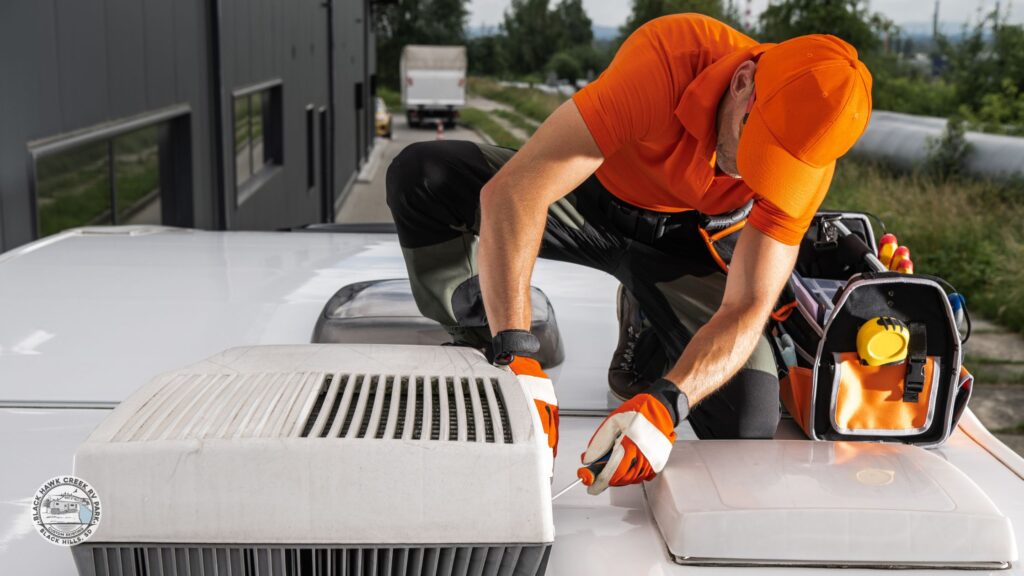
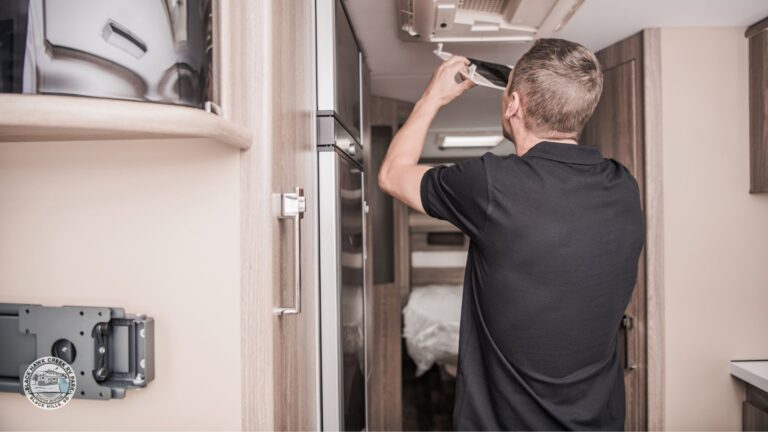
Cleaning the AC unit of an RV is an important maintenance task to ensure efficient cooling and air quality. Here’s a step-by-step guide on how to clean your RV’s AC unit:
Tools and Materials You’ll Need:
- Screwdriver
- Soft brush or vacuum cleaner with a brush attachment
- Mild dish soap
- Water
- Spray bottle
Step 1: Turn Off the Power
Step 2: Remove the Cover
Step 3: Remove Debris
Step 4: Clean the Coils
Step 5: Clean the Filters
Step 6: Clean the Condensate
Step 7: Check the Fan Blades
Step 8: Reassemble and Test
Regularly cleaning your RV’s AC unit not only ensures better cooling and air quality but also extends the lifespan of the unit. It’s an essential part of RV/camper maintenance that keeps you comfortable during your travels.
4. Check All The RV’s Lights
Safety is paramount on the road, and proper lighting is a key component of it. Ensure that all your RV’s lights are working as they should. This includes high beams, brake lights, fog lamps, and turn signals. Replace any bulbs that are burnt out.
5. Check the Brakes
Your RV’s braking system is essential for your safety. Regularly inspect the brakes, including the brake pads and rotors, and make sure they are in good condition. If you notice any issues, have a professional technician service them.
6. Get an Oil Change
Just like your car, your RV’s engine needs regular oil changes. Check the oil levels and quality, and adhere to the recommended oil change schedule. Proper engine maintenance is essential for keeping your RV/travel trailer running smoothly.
7. Water Heater Maintenance
Another crucial RV appliance that requires attention is the water heater. These should be serviced annually to flush out sediment buildup and prevent potential damage.
8. Inspect Safety Equipment
Safety equipment is non-negotiable when it comes to your RV. Ensure you have a functioning fire extinguisher and gas detector on board. Rechargeable fire extinguishers should be serviced every six years, and gas detectors need regular replacement to ensure they remain effective.
9. Flush and Clean Your Holding Tanks
Your RV has different holding tanks: the fresh water tank, the grey water tank, and the black water tank. Regularly flush and clean these tanks to prevent odors and clogs. Use specialized RV tank treatments to maintain optimal tank health.
10. Weigh Your RV
It’s essential to weigh your RV to ensure it’s within its weight limits. Overloaded RVs can lead to poor handling, increased wear on tires, and even safety issues. Weigh your RV periodically and adjust your packing accordingly.
11. Inspect Your Propane
Propane is a crucial energy source for many RV appliances. Regularly inspect the propane system for leaks and ensure the tanks are in good condition. Don’t forget to check the propane levels to avoid running out during your adventures.
12. Check and Repair Seals as Needed
Leaks are an RVer’s worst nightmare. Regularly inspect the seals around windows, exterior compartments, doors, and on the roof for any signs of wear or water damage. Repair or replace damaged seals promptly to prevent costly water-related issues.
When to Seek Professional RV Maintenance
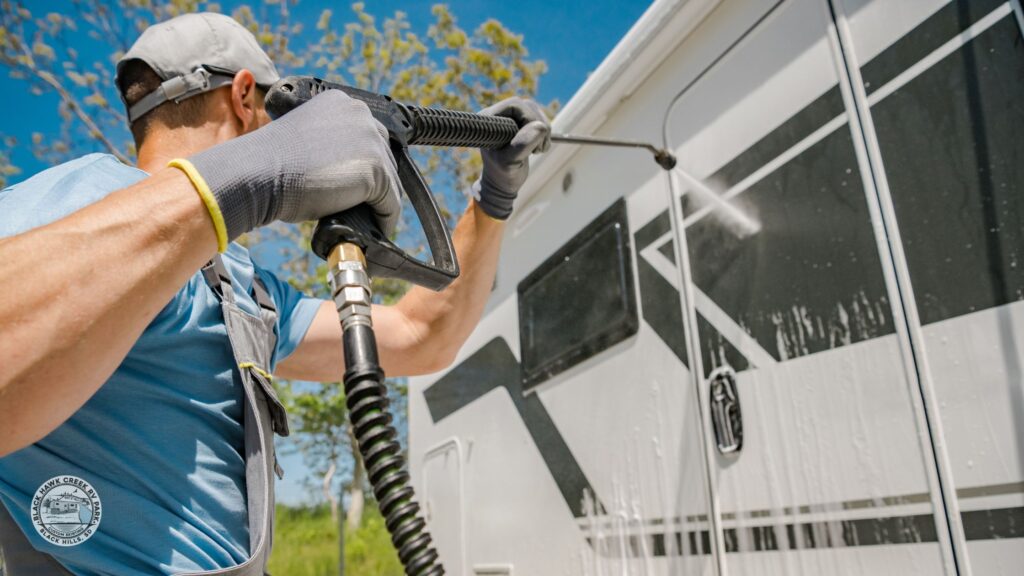
While DIY maintenance is rewarding and cost-effective, some tasks require professional expertise:
Tasks Best Left to Professionals
- LP gas system repairs and certification
- Major electrical system troubleshooting
- Slide-out mechanism repairs
- Roof replacement or major repairs
- Engine and transmission service (for motorhomes)
- Warranty-covered repairs
Finding Qualified RV Technicians
- Look for RVDA-RVIA certified technicians
- Check reviews and ask for recommendations
- Verify experience with your specific RV type
- Ask about continuing education and certifications
Preparing for Service Appointments
- Document the issue thoroughly
- Take photos or videos of problems
- Compile service history relevant to the issue
- Make a list of questions and concerns
- Remove valuables and prepare the RV for service
Building a relationship with a trusted service center is an essential part of any RV maintenance checklist and overall camper care routine. It provides peace of mind and ensures your vehicle stays in top condition for every adventure. Many full-time RVers also maintain relationships with service centers in different regions they frequently visit, allowing them to receive consistent and reliable service wherever the road takes them.
Creating a Personalized RV Maintenance Schedule
Developing a customized maintenance schedule ensures nothing is overlooked:
Sample Maintenance Schedule Framework
Before Each Trip:
- Complete pre-trip checklist for interior, exterior, and mechanical systems
- Check tire pressure and condition
- Test all lights and signals
- Verify proper operation of slides and awnings
Monthly:
- Inspect roof and seals
- Check battery condition and connections
- Run generator under load
- Inspect plumbing for leaks
Quarterly:
- Deep clean interior and exterior
- Lubricate moving parts
- Check all safety devices
- Inspect suspension components
Annually:
- Complete roof inspection and reseal as needed
- Service all appliances
- Replace water filter
- Sanitize water system
- Complete safety system checks
Seasonally:
- Prepare for winter storage or de-winterize
- Change furnace filters before heating season
- Service air conditioning before cooling season
Customize this framework based on your RV type, usage patterns, and manufacturer recommendations. Digital maintenance tracking apps can help you stay organized and receive timely reminders for scheduled maintenance tasks.
Conclusion
Consistent RV and camper care is an investment that pays significant dividends in reliability, safety, and resale value. By following this comprehensive RV maintenance checklist and guide to RV and travel trailer maintenance, you’ll develop good habits that prevent costly repairs and enhance your travel experiences. Remember, preventive camper care is always less expensive and less stressful than emergency repairs—especially when you’re far from home.
Start implementing your personalized RV maintenance checklist right away, keeping detailed records of all services performed. With proper camper care, your RV will provide years of comfortable, reliable travel and countless memories on the road. Whether you’re a weekend warrior or a full-time RVer, prioritizing camper care and maintenance ensures your home-on-wheels remains in top condition for all your adventures.
Enjoy Worry-Free Travel After Your RV Maintenance
After ensuring your RV/camper is in perfect working condition through proper maintenance, it’s time to plan your next adventure! Located just 2 miles from the interstate and only 5 minutes from vibrant Rapid City, Black Hawk Creek RV Park offers the perfect base for exploring South Dakota’s iconic attractions.
Our spacious RV sites accommodate rigs of all sizes, and we’re open year-round for your convenience. Whether you’re planning to visit Mount Rushmore, Crazy Horse, Custer State Park, Badlands National Park, Devils Tower, or historic Deadwood, you’ll find our location ideal for day trips to these magnificent destinations.
As a special offer for RV enthusiasts, when you order custom skirting for your RV, you’ll receive a $200 credit toward your stay with us! Book your reservation today and experience the perfect combination of comfortable accommodations and convenient access to the Black Hills’ most spectacular attractions.