


The Minuteman Missile National Historic Site stands as a powerful reminder of America’s Cold War history, preserving authentic nuclear missile facilities in the plains of western South Dakota. Like the Minute Man National Historic Park, which commemorates the American Revolutionary War, this unique National Park Service unit preserves critical moments in U.S. history through well-maintained sites. The Minuteman Missile site consists of three main components: an informative Visitor Center, the Launch Control Facility Delta-01, and the Launch Facility (Missile Silo) Delta-09. These preserved facilities were once part of a vast missile field containing 150 Minuteman missiles across western South Dakota, serving as crucial elements in America’s nuclear deterrence strategy from 1963 to the 1990s. The Minuteman Missile site offers visitors a rare opportunity to step back in time and experience firsthand the tension and technology that defined an era when the world stood on the brink of nuclear conflict.
Historical Background of the Minuteman Missile Program
Origins of the Minuteman Program
The Minuteman missile program emerged during the height of the Cold War as a response to escalating tensions between the United States and the Soviet Union. Named after the Revolutionary War “minutemen” who could be ready to fight at a minute’s notice—commemorated today at sites like the Minute Man National Historic Park—these missiles represented a technological leap in America’s nuclear capabilities. The program began in the early 1960s as a critical component of America’s nuclear triad defense strategy, which included land-based ICBMs, submarine-launched ballistic missiles, and strategic bombers.
The Minuteman missiles were revolutionary in their solid-fuel design, which allowed them to be launched quickly—within minutes of receiving the command. Earlier liquid-fueled missiles required hours of preparation before launch. Each Minuteman missile could travel over 6,000 miles at speeds exceeding 15,000 miles per hour and carried a nuclear warhead with destructive power many times greater than the bombs dropped on Hiroshima and Nagasaki.
The development of the Minuteman missile system represented a significant advancement in ICBM technology. These missiles were housed in underground silos spread across the Great Plains, designed to withstand nuclear attacks and remain operational even after a first strike. Today, visitors can learn about this history at sites near Minuteman National Park, which preserves parts of the missile fields. The Minuteman I was first deployed in 1962, followed by the more advanced Minuteman II and III versions in subsequent years.
The Cold War Context
The deployment of Minuteman missiles occurred during a period of intense geopolitical rivalry between the United States and Soviet Union. This era was defined by the concept of nuclear deterrence—the idea that neither superpower would risk attacking the other because of the certainty of devastating retaliation. This strategy, often referred to as “mutually assured destruction” or MAD, created a precarious balance of power that helped prevent direct military conflict between the superpowers.
At the height of the Cold War, approximately 1,000 Minuteman missiles were deployed across the Great Plains states, including South Dakota, North Dakota, Wyoming, Montana, and Missouri. Today, visitors can learn about this significant part of history at Minuteman National Park, which preserves and interprets the missile sites. These missile fields formed a crucial part of America’s nuclear defense posture, with crews standing ready 24/7 to launch if the order ever came. The missiles were positioned in remote, rural areas to minimize civilian casualties in case of a Soviet attack while still being able to reach targets in the Soviet Union.
Deactivation and Historic Preservation
The end of the Cold War in the early 1990s led to significant changes in America’s nuclear strategy. The 1991 Strategic Arms Reduction Treaty (START) between the United States and the Soviet Union called for substantial reductions in nuclear arsenals on both sides. As part of this agreement, the Air Force began deactivating many Minuteman II missiles, including those in the 44th Missile Wing’s Delta Flight area in South Dakota.
The Delta missile field was decommissioned in 1993, with most of its facilities being imploded, filled with rubble, or otherwise dismantled. However, recognizing the historical significance of these sites, the Air Force and National Park Service worked together to preserve Delta-01 Launch Control Facility and Delta-09 Launch Facility as representative examples of America’s nuclear deterrent system.
In 1999, Congress passed legislation establishing the Minuteman Missile National Historic Site to preserve and interpret these facilities for future generations. After years of planning and preparation, the site officially opened to the public in 2004. The preservation of these facilities provides a tangible connection to Cold War history that might otherwise exist only in documents and memories. Today, the Minuteman Missile National Historic Site stands as one of the few places where visitors can experience authentic Cold War missile facilities as they existed during active service.
Components of the Minuteman Missile National Historic Site
Visitor Center
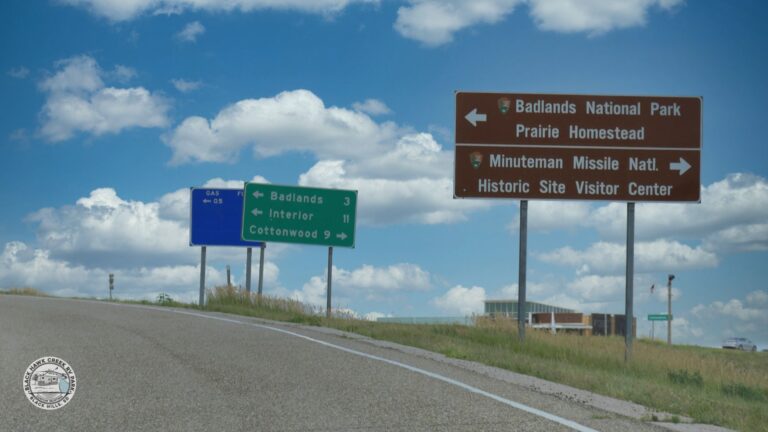
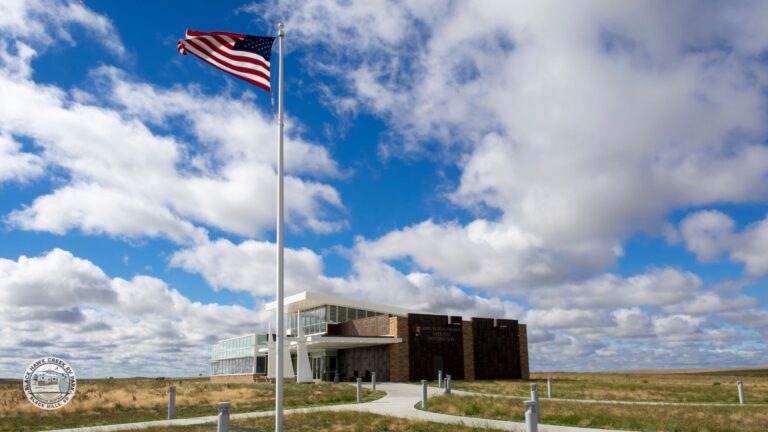
The Minuteman Missile Visitor Center serves as the essential first stop for anyone exploring this historic site. Located just off Interstate 90 at Exit 131 near Cactus Flat, South Dakota, the center opened in 2015 and provides crucial context for understanding the missile facilities. The modern facility features extensive exhibits that chronicle Cold War history, explain nuclear deterrence strategy, and detail the technological aspects of the Minuteman missile program.
Upon entering the Visitor Center, guests can view a compelling orientation film that sets the stage for their visit by explaining the historical context of the Cold War and the role of Minuteman missiles in American defense strategy. The center’s exhibits include authentic missile components, interactive displays about nuclear physics and missile technology, and personal stories from Air Force personnel who operated these facilities during the Cold War.
The knowledgeable park rangers at the Visitor Center can answer questions, provide tour information, and help visitors plan their experience at the launch facilities. The center also houses a bookstore with resources for those wanting to deepen their understanding of Cold War history. With its comprehensive exhibits and educational resources, the Visitor Center provides essential context that enhances the experience of visiting the actual missile facilities.
Launch Control Facility Delta-01
The Launch Control Facility Delta-01 offers visitors a rare opportunity to see an authentic nuclear missile control center preserved as it was during active service. Located about 15 miles down the road from the Visitor Center, this facility consists of two main components: the above-ground support building and the underground Launch Control Center.
The above-ground support building housed the day-to-day operations of the facility. Here, visitors can see the security center where Air Force security personnel monitored the facility, the day room where off-duty personnel relaxed, the kitchen and dining area, and the sleeping quarters. The building has been meticulously preserved to look as it did in the late 1980s and early 1990s, complete with period furnishings, equipment, and even magazines and other personal items that help convey what daily life was like for the personnel stationed here.
The heart of Delta-01, however, lies 31 feet below ground in the Launch Control Center (LCC). Visitors descend via an elevator to reach this hardened capsule, designed to withstand nuclear blasts. Inside the capsule, two missile officers (known as missileers) worked 24-hour shifts, ready to launch up to 10 Minuteman missiles if they received the presidential order. The LCC contains the launch control consoles, communications equipment, and the security systems that protected America’s nuclear arsenal.
Launch Facility (Missile Silo) Delta-09
The Delta-09 Launch Facility, located about 15 miles from the Visitor Center, provides visitors with the opportunity to see an actual Minuteman missile silo. This facility housed a fully operational Minuteman II missile from 1963 until the early 1990s. Today, the silo contains a deactivated training missile (without its nuclear warhead) that gives visitors a realistic sense of what these weapons looked like.
The missile silo itself is an engineering marvel—a reinforced concrete structure extending 80 feet below ground, designed to protect the missile from nuclear blasts while keeping it ready for immediate launch. The silo’s 90-ton concrete and steel lid (known as the launcher closure door) would have rolled open in seconds to allow the missile to launch. Today, the door remains partially open, allowing visitors to look down into the silo from a glass viewing enclosure built above it.
Visitors to Delta-09 can take a self-guided tour using a cell phone audio guide that explains various features of the facility. The tour includes information about the missile’s specifications, the security systems that protected it, and how maintenance crews would have accessed and serviced the missile.
Life at a Minuteman Missile Facility
Missile Crews and Their Duties
Life for the personnel who operated the Minuteman missile facilities was defined by routine, punctuated by the constant awareness of their grave responsibility. At the heart of the operation were the missile combat crews—pairs of officers who served 24-hour alert shifts in the underground Launch Control Center. These missileers, as they were called, underwent rigorous training and psychological screening before being entrusted with nuclear launch codes.
During their shifts, missile crew members performed regular system checks, monitored communications, and maintained constant readiness to launch their missiles if ordered by the President. The two-person authentication system was a critical safeguard—both officers had to verify launch orders independently and then simultaneously turn keys located far enough apart that no single person could activate them both.
Technological Systems and Readiness
The Minuteman missile system represented one of the most sophisticated technological achievements of its time, designed to maintain constant readiness despite isolation and potentially catastrophic conditions. Each missile silo and launch control facility was hardened against nuclear attack, with reinforced concrete structures, shock absorbers, and electromagnetic pulse protection.
Communication systems were perhaps the most critical technological component, as they ensured that launch orders could be received even during a nuclear exchange. Multiple redundant communication networks connected the Launch Control Centers to Strategic Air Command headquarters and to the National Command Authority. These included the Primary Alerting System, the Strategic Automated Command and Control System, and the Emergency Rocket Communications System, which could launch a missile equipped with radio transmitters to relay commands if ground communications were destroyed.
Today, the legacy of the Minuteman system is commemorated and preserved at sites such as the Minute Man National Historic Park, which honors the spirit of readiness and defense from an earlier era of American history.
Civilian Life Alongside Nuclear Weapons
One of the most striking aspects of the Minuteman missile fields was their integration into the rural landscape of South Dakota. Unlike military bases separated from civilian populations, these missile facilities were scattered across working ranchland and farmland. This integration is reminiscent of sites like the Minute Man National Historic Park, where history and everyday life intersect within the landscape. Local residents lived and worked alongside some of the most powerful weapons ever created, creating a unique juxtaposition of everyday American life and nuclear deterrence.
Ranchers and farmers often had missile silos located on their property, with the government maintaining easements for access roads. Many locals recall the regular sight of Air Force vehicles traveling these roads to perform maintenance or crew changes at the facilities. Some ranchers would graze their cattle right up to the security fences surrounding the missile silos, creating surreal scenes of livestock peacefully grazing next to nuclear weapons.
The relationship between local communities and the Air Force personnel was generally positive. The missile program brought economic benefits to rural areas through employment opportunities, both directly in the missile program and in supporting services.
Planning Your Visit to Minuteman Missile National Historic Site
Practical Visitor Information
The Minuteman Missile National Historic Site is located in western South Dakota, just north of Interstate 90. The Visitor Center is situated at Exit 131, approximately 70 miles east of Rapid City. This modern facility serves as the starting point for exploring the historic missile facilities and is open year-round, with hours varying seasonally.
Admission to the Visitor Center and the Delta-09 missile silo is free, making these components accessible to all visitors. However, the Delta-01 Launch Control Facility can only be visited through guided tours, which cost $12 for adults and $8 for children, seniors, and military personnel.
Regarding accessibility, the Visitor Center is fully accessible to visitors with disabilities. The Delta-09 missile silo viewing area is also accessible, with a paved path leading to the viewing platform. However, the Delta-01 Launch Control Facility presents challenges for visitors with mobility limitations, as access to the underground Launch Control Center requires using a small elevator and navigating narrow spaces.
Tour Options and Experiences
Visitors to the Minute Man National Historic Park can choose from several different experiences based on their interests and available time. For those with limited time, a visit to the Visitor Center provides an excellent overview of Cold War history and the Minuteman missile program through its exhibits and orientation film. This experience typically takes about 30-60 minutes and requires no reservations.
The Delta-09 missile silo offers a self-guided experience that can be enjoyed at your own pace. Visitors can drive to the silo (located about 15 miles from the Visitor Center) and explore the outdoor interpretive displays. A cell phone audio tour is available by calling the number posted at the site, providing detailed information about the missile silo and its operations. This experience typically takes 30-45 minutes and also requires no reservations.
For visitors interested in a deeper educational experience, the park occasionally offers special programs, including talks by former missileers and extended tours. Check the Minute Man National Historic Park’s website or inquire at the Visitor Center about any special events during your visit.
To make the most of your experience, plan to spend at least 3-4 hours exploring all three components of the site. This allows time for the exhibits at the Visitor Center, the guided tour of Delta-01, and the self-guided visit to Delta-09, plus driving time between locations. If you’re to make the most of your experience at Minuteman National Park, plan to spend at least 3–4 hours exploring all three components of the site. This allows time for the exhibits at the Visitor Center, the guided tour of Delta-01, and the self-guided visit to Delta-09, plus driving time between locations. If you’re particularly interested in Cold War history or military technology, you might want to allocate additional time for more in-depth exploration of the exhibits and asking questions of the knowledgeable park staff.
Nearby Attractions and Accommodations
The Minuteman Missile National Historic Site’s location in western South Dakota places it near several other significant attractions, making it easy to incorporate into a broader Black Hills vacation. Badlands National Park is immediately adjacent to the missile site, with the Badlands Visitor Center just a few miles from the Minuteman Visitor Center. The dramatic landscape of eroded buttes, pinnacles, and spires offers a striking contrast to the technological focus of the missile facilities.
Further west, visitors can explore the Black Hills region, home to iconic attractions like Mount Rushmore National Memorial (about 70 miles or a 1-hour drive from the missile site), Crazy Horse Memorial, Custer State Park, and the historic town of Deadwood. These destinations can easily be combined with the Minuteman site for a comprehensive South Dakota experience. For history buffs, it’s also worth noting the similarly named Minute Man National Historic Park in Massachusetts, which commemorates the opening battle in the American Revolution—offering a completely different yet equally powerful perspective on national defense and heritage.
Accommodation options vary from basic to comfortable. In Wall, visitors can find several motels, including the Best Western Plains Motel and America’s Best Value Inn. The Badlands Interior Motel and Campground offers rooms near the eastern entrance to Badlands National Park. For those who prefer camping, Badlands National Park offers campgrounds at Cedar Pass and Sage Creek.
For a wider range of accommodations and dining options, Rapid City (about 70 miles west) serves as the gateway to the Black Hills and offers numerous hotels, restaurants, and services. Black Hawk Creek RV Park & Cabins, located just 2 miles from the interstate and a 5-minute drive from Rapid City, provides an excellent base for exploring the Minuteman Missile National Historic Site and other attractions. With options ranging from RV sites to cozy cabins, it’s an ideal location for both short-term travelers and those seeking extended stays while exploring South Dakota’s historic sites.
Your Gateway to South Dakota's Historic Treasures
After exploring the fascinating Cold War history at the Minuteman Missile National Historic Site, continue your South Dakota adventure with a comfortable stay at Black Hawk Creek RV Park & Cabins. Located just 2 miles from the interstate and only 5 minutes from Rapid City, our year-round facility offers the perfect base for exploring all of South Dakota’s historic treasures.
Whether you’re traveling in an RV or prefer the comfort of a cozy cabin, Black Hawk Creek provides convenient accommodations for both short visits and extended stays. Our strategic location puts you within easy driving distance of the Minuteman Missile National Historic Site, Mount Rushmore, Crazy Horse Memorial, Badlands National Park, and other iconic attractions.
After a day of historical exploration, return to the peaceful setting of Black Hawk Creek, where you can relax and prepare for your next South Dakota adventure. Book your stay today at Black Hawk Creek RV Park and position yourself perfectly for discovering the rich history and natural beauty of the Black Hills region.