


Table of contents
- Historical Background of the Ring-Necked Pheasant
- Official Designation as State Bird
- Physical Characteristics and Identification
- Habitat and Ecology
- Cultural and Economic Significance in South Dakota
- Conservation Status and Challenges
- South Dakota’s Other State Symbols
- Conclusion
- Explore South Dakota’s Natural Beauty at Black Hawk Creek
- Related Articles
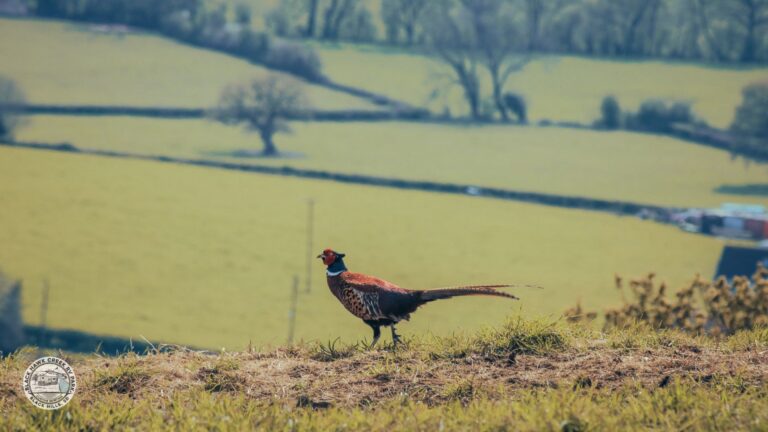
Wondering what is South Dakota’s state bird? The Ring-necked Pheasant (Phasianus colchicus) has proudly held the title of South Dakota’s state bird since February 13, 1943. This vibrant, colorful game bird, despite not being native to North America, has become deeply intertwined with South Dakota’s identity, culture, and economy. The Chinese ringneck pheasant is beloved by hunters and wildlife enthusiasts alike, making it a fitting symbol for the state. In this comprehensive guide, we’ll explore the state bird of South Dakota’s fascinating history, distinctive physical characteristics, preferred habitats, and significant cultural impact on the Mount Rushmore State.
Historical Background of the Ring-Necked Pheasant
Ancient Origins
The Ring-necked Pheasant boasts an impressive lineage that stretches back millions of years. Archaeological evidence has uncovered pheasant remains in southern France dating back approximately 13 million years, demonstrating the bird’s ancient presence in the European landscape. The Greeks were familiar with these striking birds as early as the 10th Century B.C., which led to the scientific name “Phasianus ornis,” derived from the Phasis River (now in modern Georgia).
Chinese civilization documented pheasants roughly 3,000 years ago, explaining why the bird is often referred to as the “Chinese ringneck pheasant.” As Roman influence spread throughout western Europe, so did the pheasant. Julius Caesar’s invasion of England in the 1st century B.C. introduced these colorful birds to Britain, where they thrived and became established as prized game birds.
Introduction to North America
The first documented introduction of pheasants to North America occurred in 1733, when the black-necked strain was released in New York. Additional releases followed in New Hampshire and New Jersey, though these early attempts to establish populations were largely unsuccessful. The first truly successful pheasant population in North America was established in Oregon’s Willamette Valley in 1881, when approximately 60 Chinese ringnecks were released.
These initial successes demonstrated that the Ring-necked Pheasant could adapt well to certain North American environments, particularly those with agricultural landscapes similar to their native habitats. The birds’ ability to thrive in cultivated areas, combined with their appeal as game birds, led to their widespread introduction throughout the continent.
Arrival in South Dakota
What is South Dakota’s state bird’s history in the region? The Ring-necked Pheasant first arrived in South Dakota in 1908 when birds were released near Doland in Spink County. While some accounts suggest earlier introductions around 1898, these efforts didn’t establish breeding populations. The 1908 introduction proved successful, and in the following decade, the state purchased and released thousands of birds throughout South Dakota.
The pheasant population in South Dakota exploded, reaching an estimated peak of 12 million birds by 1935. This remarkable success can be attributed to the ideal habitat conditions found in South Dakota’s agricultural landscape, which provided abundant food sources and suitable cover. While current populations are lower than this historic peak, conservation efforts and soil management programs have helped stabilize pheasant numbers throughout the state.
Official Designation as State Bird
Legislative Process
On February 13, 1943, the Ring-necked Pheasant officially became the state bird of South Dakota through legislative action. The designation came after consideration of several potential candidates that could represent the state’s natural heritage. The pheasant’s widespread presence throughout South Dakota and its economic importance as a game bird made it a natural choice for this honor.
The legislative process involved proposals from wildlife conservation groups, hunting organizations, and citizens who recognized the pheasant’s significance to the state. After debate and consideration, the legislature approved the Ring-necked Pheasant as South Dakota’s official avian emblem, formalizing the bird’s already prominent place in the state’s identity.
Significance of the Timing
The 1943 designation of the Chinese ringneck pheasant as South Dakota’s state bird occurred during a significant period in American history. The United States was deeply involved in World War II, and the selection of a state symbol during this time reflected a desire to celebrate distinctly American identity and heritage.
The timing also coincided with a period when pheasant hunting had become firmly established as both a cultural tradition and economic driver in South Dakota. By officially recognizing the pheasant as the state bird, South Dakota acknowledged the bird’s importance to rural communities, agricultural landscapes, and the state’s outdoor recreation economy. The designation helped solidify the pheasant’s place in South Dakota’s cultural identity during a time of national challenge and change.
Physical Characteristics and Identification
Appearance and Coloration
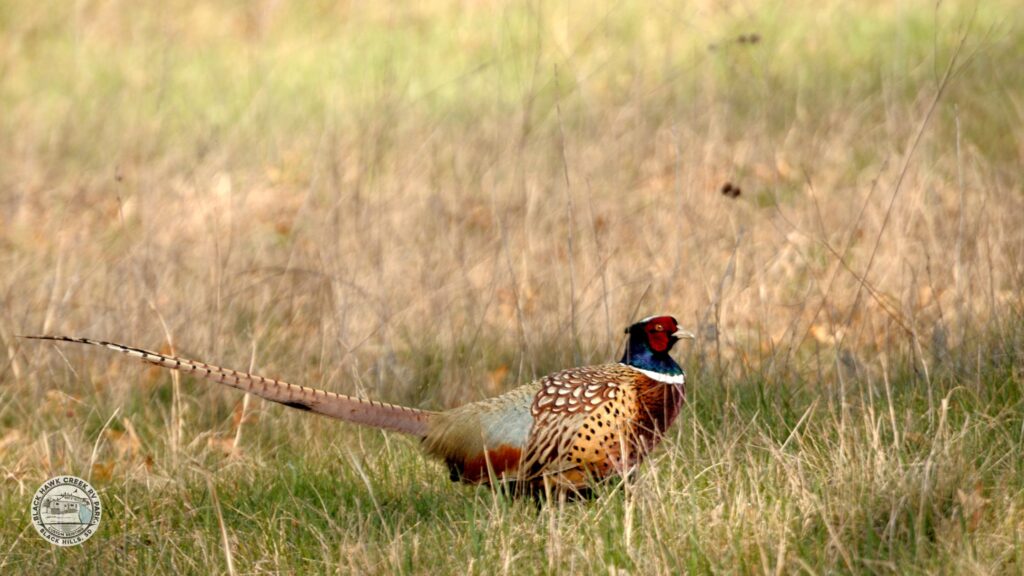
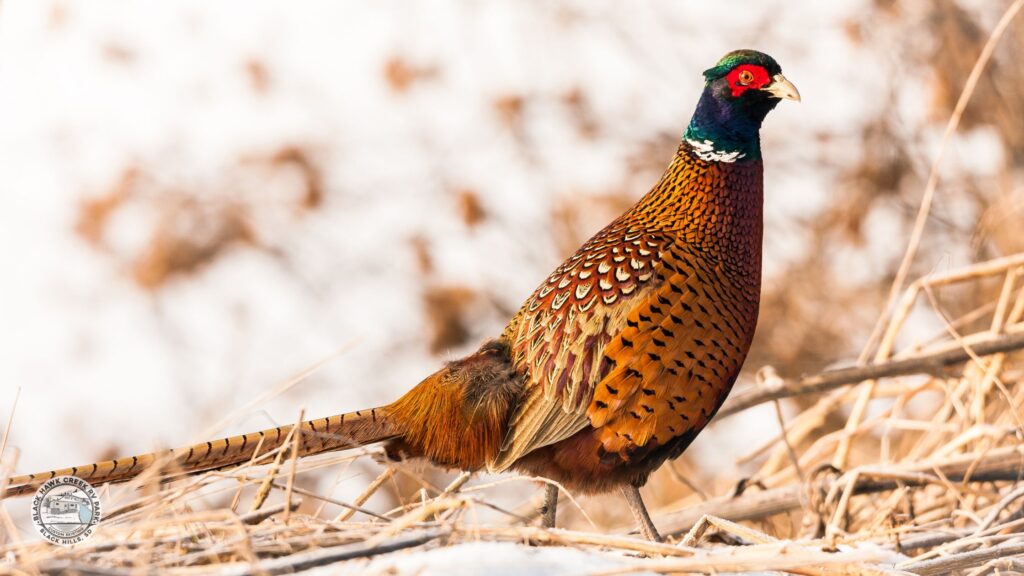
The Ring-necked Pheasant displays striking sexual dimorphism, with males and females looking dramatically different. Male pheasants are among the most colorful birds in North America, featuring an iridescent green-blue head, bright red facial wattles, and the distinctive white neck ring that gives the species its name. Their bodies showcase a rich golden-brown coloration with black markings, and they possess a long, pointed tail that can reach up to two feet in length. In total, male pheasants typically measure 30-36 inches from beak to tail tip and weigh between 2-3 pounds.
Female pheasants, by contrast, wear a mottled brown plumage that provides excellent camouflage when nesting. They lack the colorful head and neck ring of males and have shorter tails. This cryptic coloration helps protect females and their nests from predators. Females are generally smaller than males, measuring about 20-25 inches in length and weighing 1.5-2 pounds.
Vocalizations and Behavior
When asking what is South Dakota’s state bird known for behaviorally, its distinctive vocalizations stand out. Male Ring-necked Pheasants produce a characteristic “khaaaa-cack” crow, often accompanied by wing-flapping, particularly during the breeding season. This call serves to establish territory and attract females. When alarmed, pheasants emit a harsh croaking sound before typically running for cover rather than immediately taking flight.
Pheasants are primarily ground-foraging birds, scratching through soil and vegetation to find seeds, grains, and insects. They typically roost in trees or dense vegetation at night for protection from predators. During the breeding season, males establish territories and may gather small harems of females, while in winter, pheasants often form larger mixed-sex flocks for foraging and protection.
Similar Species
Female Ring-necked Pheasants can sometimes be confused with other upland game birds found in South Dakota, particularly the Sharp-tailed Grouse and Greater Prairie Chicken. However, female pheasants can be distinguished by their longer, more pointed tails and slimmer build compared to the rounder, shorter-tailed grouse species.
Other game birds in South Dakota include the Wild Turkey, which is much larger than the pheasant with a distinctive fan-shaped tail, and the Gray Partridge, which is significantly smaller with a rounder body shape. The Hungarian Partridge also inhabits similar areas but lacks the pheasant’s long tail and has a more compact appearance. For bird watchers and hunters, understanding these differences is essential for proper identification in the field.
Habitat and Ecology
Preferred Habitats
The Ring-necked Pheasant thrives in diverse landscapes that combine open areas with adequate cover. In South Dakota, ideal pheasant habitat includes agricultural fields interspersed with grasslands, shelterbelts, wetland edges, and brushy areas. This mixture provides the birds with food sources from croplands while offering protective cover for nesting, roosting, and escaping predators.
During different seasons, pheasants utilize various habitat components. In spring and summer, they require tall grasses and forbs for nesting and brood-rearing. Winter brings different challenges, making dense cover like cattail marshes, shelterbelts, and woody draws essential for protection from harsh weather and predators. South Dakota’s agricultural landscape, with its patchwork of croplands, pastures, and conservation areas, creates an ideal environment for pheasants when properly managed.
Diet and Feeding Habits
Ring-necked Pheasants are omnivorous, with a diet that shifts seasonally based on availability. During spring and summer, they consume a higher proportion of insects, which provide essential protein for breeding females and growing chicks. Their diet includes grasshoppers, beetles, caterpillars, and other invertebrates found by scratching through soil and vegetation.
In fall and winter, pheasants shift to a more plant-based diet, focusing on waste grain from harvested fields, including corn, wheat, and soybeans. They also eat weed seeds, berries, and other plant materials. This adaptable feeding strategy allows pheasants to thrive in agricultural landscapes where food sources change throughout the year. Their ground-foraging behavior makes them particularly well-suited to glean leftover grain from harvested fields, creating a mutually beneficial relationship with South Dakota’s agricultural practices.
Reproduction and Life Cycle
The breeding season for Ring-necked Pheasants in South Dakota typically begins in May and extends through June. Males establish territories and perform elaborate courtship displays, including wing-flapping, calling, and strutting to attract females. A single male may mate with multiple females during the breeding season.
Female pheasants create simple ground nests, usually a shallow depression lined with vegetation, often hidden in tall grass or other dense cover. They typically lay 7-14 olive-buff colored eggs, which the female incubates alone for approximately 23-25 days. Male pheasants play no role in incubation or chick-rearing.
Unlike many bird species, pheasant chicks are precocial, meaning they leave the nest within hours of hatching. These downy chicks follow the hen and can feed themselves almost immediately, though they remain dependent on the female for protection and guidance. Predation is a significant factor in pheasant mortality, with only about 50% of nests successfully hatching and a small percentage of chicks surviving to adulthood. Those that do survive typically live 1-2 years in the wild, though some individuals may reach 3-4 years of age.
Cultural and Economic Significance in South Dakota
Hunting Tradition
Pheasant hunting has become deeply embedded in South Dakota’s cultural fabric since the first official hunting season was established in 1919—initially just a one-day season limited to Spink County. Today, the state bird of South Dakota draws tens of thousands of hunters annually from across the United States and beyond, creating a tradition that spans generations for many families.
The pheasant hunting season typically opens in mid-October and runs through early January, with special youth hunts and resident-only seasons often preceding the main opener. This annual event has become a cultural institution in South Dakota, with communities across the state hosting hunters, organizing community meals, and celebrating the hunting heritage. For many South Dakota families, the pheasant opener is as significant as major holidays, bringing together relatives and friends for annual reunions centered around the hunt.
Economic Impact
The economic impact of pheasant hunting on South Dakota is substantial and far-reaching. Each year, the pursuit of the Chinese ringneck pheasant generates hundreds of millions of dollars for the state’s economy. In peak years, over 100,000 non-resident hunters travel to South Dakota specifically for pheasant hunting, each spending on licenses, accommodations, meals, equipment, and services.
Rural communities particularly benefit from this influx of visitors during hunting season. Small towns throughout the pheasant belt see their populations temporarily swell as hunters fill local motels, restaurants, and shops. Many agricultural landowners have diversified their income by offering guided hunts or leasing hunting rights, creating an additional revenue stream that helps support family farms. The economic ripple effect extends to sporting goods stores, gas stations, taxidermists, and various service industries, demonstrating how this non-native bird has become an economic cornerstone for many South Dakota communities.
For travelers exploring South Dakota’s natural beauty and wildlife, Black Hawk Creek RV Park offers an ideal base for experiencing the state’s outdoor traditions, including opportunities to observe the state bird in its natural habitat.
Cultural Representations
The Ring-necked Pheasant appears prominently in South Dakota’s cultural expressions, from art and literature to marketing and tourism materials. The colorful bird graces everything from state promotional materials to local business logos, becoming an unofficial mascot for the state beyond its official designation.
Annual events celebrating the pheasant include community festivals, art shows, and the famous “Pheasant Opener” festivities in towns across the state. The bird appears in regional artwork, photography, and crafts, often depicted in flight over golden fields or in natural prairie settings. South Dakota’s tourism industry frequently features images of the vibrant pheasant in promotional materials, using the bird as a symbol of the state’s natural beauty and outdoor recreational opportunities.
For visitors interested in experiencing South Dakota’s wildlife, staying at Black Hawk Creek RV Park provides convenient access to areas where pheasants and other native wildlife can be observed in their natural habitats.
Conservation Status and Challenges
Population Trends
The Ring-necked Pheasant population in South Dakota has experienced significant fluctuations since its introduction. After reaching an estimated peak of 12 million birds in 1935, numbers have generally declined, though with considerable year-to-year variation. Recent decades have seen pheasant populations stabilize at lower levels than historic highs, with annual fluctuations influenced by weather conditions, habitat availability, and agricultural practices.
South Dakota Game, Fish and Parks conducts annual pheasant brood surveys, providing data on population trends across the state. These surveys involve systematic roadside counts during late summer to estimate pheasant numbers and reproductive success. Recent years have shown regional variations in pheasant abundance, with some areas maintaining strong populations while others have experienced declines.
Factors affecting population trends include severe winters, which can cause significant mortality; wet springs, which can reduce nesting success; and long-term habitat changes related to agricultural intensification and the conversion of grasslands to cropland. Climate change presents additional challenges, potentially altering the timing of seasonal changes and increasing extreme weather events that affect pheasant survival.
Habitat Conservation Efforts
Recognizing the importance of habitat to pheasant populations, numerous conservation initiatives focus on preserving and enhancing suitable environments for South Dakota’s state bird. The federal Conservation Reserve Program (CRP) has been particularly influential, providing financial incentives for landowners to convert environmentally sensitive cropland to vegetative cover, creating ideal pheasant habitat in the process.
State programs complement these federal efforts, including South Dakota’s Walk-In Area program, which provides public access to private lands with valuable wildlife habitat. Conservation organizations like Pheasants Forever work with landowners to implement habitat improvements, including native grass plantings, food plots, and shelter belts that benefit pheasants and other wildlife.
For visitors interested in wildlife conservation, long-term RV parks in South Dakota like Black Hawk Creek offer opportunities to explore these conservation areas and observe the results of habitat management efforts.
Management Practices
South Dakota employs various management strategies to maintain healthy pheasant populations for both ecological balance and recreational opportunities. While the state primarily relies on wild pheasant populations, some limited stocking occurs in specific areas to supplement hunting opportunities, particularly in regions where habitat conditions cannot support self-sustaining populations.
Habitat management remains the cornerstone of pheasant conservation, with efforts focused on creating a landscape mosaic that provides all the elements pheasants need throughout their life cycle. This includes managing public lands specifically for wildlife value and working with private landowners to implement wildlife-friendly agricultural practices.
Hunting regulations are carefully designed to maintain sustainable harvest levels while providing recreational opportunities. These include bag limits, season lengths, and shooting hours designed to protect breeding populations. Research continues into best management practices, with studies examining everything from predator-prey relationships to the effects of various agricultural practices on pheasant reproduction and survival.
South Dakota’s Other State Symbols
While the Ring-necked Pheasant holds the distinction of being South Dakota’s state bird, it is part of a collection of official symbols that represent the state’s natural heritage and cultural identity. The Coyote (Canis latrans) serves as the state animal, embodying the adaptability and resilience characteristic of South Dakota’s people and wildlife.
The American Pasque flower (Pulsatilla hirsutissima) is the state flower, one of the earliest blooming plants in spring, often pushing through late snow to bloom on prairie hillsides. The Black Hills Spruce (Picea glauca densata) represents South Dakota as the state tree, highlighting the importance of the Black Hills ecosystem.
Other notable state symbols include the Black Hills gold as the state jewelry, the Honey Bee as the state insect, and Fairburn Agate as the state gemstone. Together with the Chinese ringneck pheasant, these symbols tell the story of South Dakota’s diverse landscapes, from eastern prairies to western mountains, and celebrate the state’s natural abundance.
Visitors exploring South Dakota can experience many of these state symbols firsthand by staying at Black Hawk Creek RV Park, which offers convenient access to the Black Hills and other natural areas where these emblems of South Dakota can be observed.
Conclusion
The Chinese Ringneck Pheasant’s journey from Asian import to beloved state bird reflects South Dakota’s unique relationship with this colorful, adaptable species. Despite not being native to North America, the pheasant has become thoroughly integrated into South Dakota’s ecological, economic, and cultural landscapes. When asking what is South Dakota’s state bird, the answer reveals much more than just a name—it opens a window into the state’s history, values, and relationship with the natural world.
From its official designation in 1943 to its current status as a cornerstone of the state’s outdoor recreation economy, the Chinese ringneck pheasant continues to play a vital role in South Dakota’s identity. Conservation efforts aimed at preserving pheasant habitat benefit numerous other species while maintaining the traditions and economic opportunities that have developed around this remarkable bird.
As South Dakota faces changing agricultural practices, climate challenges, and evolving land use patterns, the future of the state bird of South Dakota will depend on continued commitment to habitat conservation and sustainable management. Through these efforts, the Ring-necked Pheasant will remain a vibrant symbol of South Dakota for generations to come, continuing to inspire artists, attract visitors, support rural economies, and embody the spirit of this diverse and beautiful state.
Explore South Dakota’s Natural Beauty at Black Hawk Creek
After learning about what is South Dakota’s state bird and other natural wonders, experience them firsthand by staying at Black Hawk Creek RV Park & Cabins. Located just 2 miles from the interstate and only 5 minutes from Rapid City, our year-round facility offers the perfect base for your South Dakota adventure. Whether you’re a bird enthusiast hoping to spot the colorful Ring-necked Pheasant or planning to visit nearby attractions like Mount Rushmore, Crazy Horse, or Badlands National Park, our convenient location puts you in the heart of it all.
Choose from spacious RV sites or cozy cabins while enjoying our peaceful surroundings where wildlife, including South Dakota’s state bird, can often be spotted. Perfect for both short vacations and extended stays, Black Hawk Creek welcomes nature lovers, photographers, and anyone looking to experience South Dakota’s natural heritage up close. Book your stay today and discover why our location is ideal for road trip travelers exploring the Mount Rushmore State!