

Table of contents
The Badlands Loop Road (Highway 240) offers one of America’s most distinctive landscape drives through the heart of Badlands National Park in South Dakota. This 31-mile scenic byway provides access to dramatic overlooks, hiking trails, and wildlife viewing opportunities that showcase the park’s unique geological features. Whether you’re wondering how long to drive through Badlands National Park or planning a comprehensive exploration of the Badlands Scenic Loop, this guide covers everything you need to know. The Badlands Scenic Loop is accessible to all vehicle types and requires no special driving skills, making it an ideal introduction to the park’s otherworldly terrain. Yes, you can drive through Badlands National Park with ease, and this article will help you make the most of your journey along this unforgettable route.
Getting to Badlands Loop Road
Accessing the Badlands Scenic Loop Road is straightforward, with two main entrance points. The Northeast Entrance near the town of Interior is accessible via I-90 Exit 131, while the Pinnacles Entrance near Wall can be reached via I-90 Exit 110. Alternative access points include routes via SD Highway 44 and SD 377, providing flexibility depending on your starting location and helping you plan how long to drive through Badlands National Park.
The park entrance fee (valid for seven days) is $30 per private vehicle, $25 per motorcycle, or $15 per individual entering by foot or bicycle. Annual passes are available for $55, and the America the Beautiful Pass ($80) covers entrance to all national parks for a year.
Badlands Scenic Loop Road is typically open year-round, though temporary closures may occur during severe winter weather. The park itself is open 24 hours a day, 365 days a year, though visitor center hours vary seasonally.
From Rapid City, the closest major city, it’s approximately a 50-minute drive to the Pinnacles Entrance. If you’re staying at Black Hawk Creek RV Park, you’re conveniently positioned just 50 minutes away from this natural wonder.
Planning Your Drive
Best Time to Visit
The Badlands Scenic Loop Road offers distinct experiences throughout the year, each with its own advantages:
- Spring (April-May): Mild temperatures (50-70°F), wildflower blooms, and newborn wildlife make this an excellent time to visit. Spring storms can create dramatic skies for photography.
- Summer (June-August): The most popular season brings longer daylight hours but also temperatures that can exceed 100°F. Early morning or evening drives are recommended to avoid midday heat and crowds.
- Fall (September-October): Perhaps the ideal time to visit, with comfortable temperatures (60-70°F), fewer crowds, and golden prairie grasses that enhance the landscape’s beauty.
- Winter (November-March): For the adventurous traveler, winter offers solitude and a stark beauty to the Badlands. Temperatures can drop below freezing, and snow may temporarily close sections of the road, but the white-dusted formations create a photographer’s paradise.
For photography enthusiasts, early morning and late afternoon provide the best lighting conditions, with the low-angled sun accentuating the textures and colors of the formations. Sunrise at Big Badlands Overlook and sunset at Pinnacles Overlook are particularly spectacular.
How Much Time to Allow
When planning how long to drive through Badlands National Park, consider these timeframes:
- Quick Drive-Through (1 hour): If you’re just passing through, you can drive the entire Badlands Scenic Loop Road in about an hour without stops.
- Basic Experience (2-3 hours): For a more satisfying experience, allow 2-3 hours to drive the loop with stops at major overlooks.
- Half-Day Experience (4-5 hours): This allows time for several short hikes and a visit to the Ben Reifel Visitor Center.
- Full-Day Experience (7-8 hours): A full day enables you to thoroughly explore the badlands loop, take multiple hikes, visit both visitor centers, and perhaps extend your journey onto Sage Creek Rim Road.
For those with limited time, prioritize the stretch between the Northeast Entrance and Cedar Pass, which contains some of the most dramatic formations and accessible trails.
Driving Considerations
The Badlands Scenic Loop Road is a well-maintained, two-lane paved highway suitable for all vehicle types, including RVs and motorcycles. While the road includes some curves and moderate elevation changes, it doesn’t present significant driving challenges under normal conditions.
Important considerations include:
- Speed Limits: Adhere to posted speed limits (generally 35-45 mph) for safety and to avoid wildlife collisions.
- Pull-Outs: Use designated pull-outs for stopping to take photos or observe wildlife. Avoid stopping in the roadway.
- Cell Service: Cell phone coverage is limited throughout the park. Download offline maps before your visit and consider carrying a physical map.
- Fuel: There are no gas stations within the park. Fill up in Wall or Interior before entering, especially if you’re planning to explore beyond the main loop. For RV travelers, be mindful of your fuel consumption, particularly when running generators or air conditioning.
- Weather Awareness: Weather conditions can change rapidly. Check the forecast before setting out and be prepared for extreme temperatures in summer and winter.
Key Overlooks and Stops (East to West)
Big Badlands Overlook
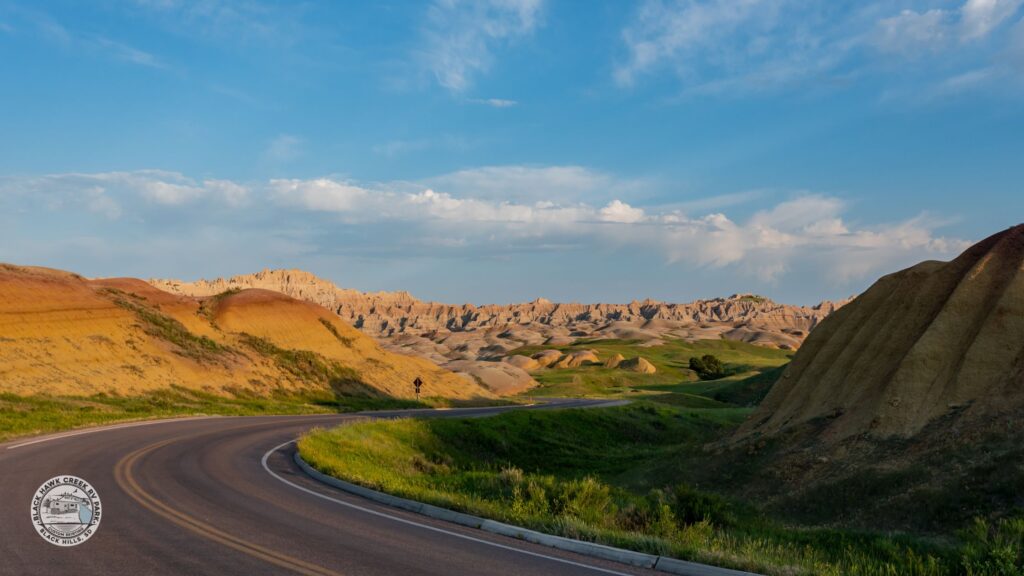
Located just inside the Northeast Entrance, Big Badlands Overlook provides your first dramatic view of the Badlands formations. From this vantage point, you’ll see an expansive panorama of eroded buttes, pinnacles, and spires stretching toward the horizon, making it a perfect stop if you’re wondering how long to drive through Badlands National Park and where to pause along the way.
A 0.2-mile paved walkway allows visitors to safely explore the viewpoint and capture photos from different angles. The geological story visible here spans millions of years, with layers of sediment deposited during the Oligocene Epoch (23–34 million years ago) when this area was a lush floodplain.
This overlook is particularly stunning at sunrise when the first light of day illuminates the formations with a golden glow. Center hours vary seasonally.
Door, Window, and Notch Trails Area
Approximately 2 miles from the Northeast Entrance, this significant stop provides access to three distinct trails that offer immersive experiences of the Badlands landscape:
- Door Trail (0.9 miles roundtrip): Beginning with a boardwalk that leads through a “door” in the Badlands Wall, this trail continues with marked posts across the rugged terrain. It’s suitable for families and offers close-up views of the formations.
- Window Trail (0.3 miles roundtrip): This short, accessible boardwalk leads to a natural “window” in the Badlands Wall, framing a picturesque view of the eroded landscape beyond.
- Notch Trail (1.5 miles roundtrip): More challenging than the others, this adventure includes climbing a log ladder and traversing a ledge to reach “the Notch,” which provides a stunning view of the White River Valley.
This stop includes restrooms and picnic tables, making it a good place for a break. The parking area can fill quickly during peak season, so arriving early is advisable.
White River Valley Overlook
This overlook offers a sweeping view of the White River Valley, showcasing how the river has shaped the landscape over millennia. The contrast between the rugged badlands formations and the relatively flat river valley creates a compelling visual narrative of geological processes.
Wildlife spotting is excellent from this vantage point, with prairie dogs, pronghorn antelope, and various bird species often visible. The changing light throughout the day transforms the scene, with midday offering clear visibility across the valley and late afternoon creating dramatic shadows among the formations.
Cedar Pass Area
The Cedar Pass area serves as the primary hub of visitor services within the park and includes:
- Ben Reifel Visitor Center: Open year-round (though hours vary seasonally), the center offers informative exhibits about the park’s geology, paleontology, and human history. Rangers provide program information, and a 22-minute film introduces visitors to the park’s features. This is also where you can participate in the Junior Ranger program if traveling with children.
- Cedar Pass Lodge: Operating seasonally (typically April through October), the lodge offers cabin accommodations and the only restaurant within the park. The restaurant specializes in regional cuisine, including Sioux Indian Tacos and South Dakota-sourced bison burgers.
- Cedar Pass Campground: Located adjacent to the visitor center, this campground offers 96 sites with electrical hookups, flush toilets, and seasonal showers.
- Cliff Shelf Nature Trail: This 0.5-mile loop trail with 200 feet of elevation gain takes you through a juniper forest oasis, offering a stark contrast to the surrounding arid landscape. Interpretive signs explain the unique microclimate that supports this vegetation.
Fossil Exhibit Trail
This 0.4-mile boardwalk trail showcases the rich paleontological history of the Badlands. Fully accessible and suitable for all ages, the trail features fossil replicas and exhibits explaining the prehistoric creatures that once inhabited this area.
You’ll learn about ancient mammals like the three-toed horse (Mesohippus), saber-toothed cat (Hoplophoneus), and giant pig-like creature (Archaeotherium) that roamed here 30-35 million years ago. The trail also explains how paleontologists work in the field and the significance of the Badlands as one of the world’s richest mammal fossil beds.
Panorama Point and Prairie Wind Overlook
These mid-route overlooks offer expansive views that showcase the diversity of the Badlands landscape:
- Panorama Point: True to its name, this stop provides a 360-degree view of the surrounding terrain, including both rugged formations and mixed-grass prairie. Interpretive panels help identify distant landmarks and explain the geological processes visible in the landscape.
- Prairie Wind Overlook: This viewpoint emphasizes the prairie ecosystem that dominates much of the park. On windy days (which are common), you can observe the mesmerizing movement of prairie grasses that inspired the overlook’s name. This stop offers excellent opportunities to photograph the contrast between the textured badlands formations and the flowing grasslands.
Yellow Mounds Overlook
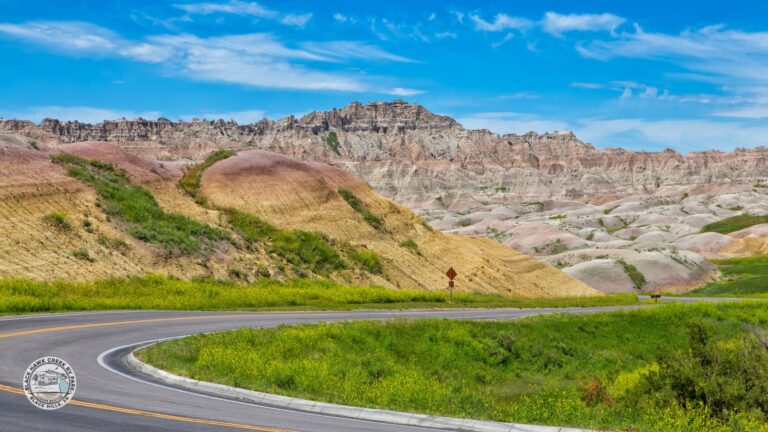
One of the most photographed locations along the Badlands Scenic Loop Road, Yellow Mounds Overlook showcases formations with distinctive yellow, orange, and red hues. These colors result from ancient soil (paleosol) that was exposed to oxygen, creating the vibrant palette that contrasts dramatically with the predominantly beige and gray formations elsewhere in the park.
The Yellow Mounds represent one of the oldest portions of the Badlands, dating back to a period when the region was covered by a shallow sea. After the sea retreated, the exposed sea bottom developed into soil during a period of tropical climate, creating the colorful layers visible today.
This overlook is particularly photogenic during golden hour, when the low-angled sun intensifies the already vibrant colors.
Conata Basin Area
The Conata Basin area includes several noteworthy stops:
- Conata Picnic Area: Equipped with sun shelters, picnic tables, and restrooms, this is an ideal spot for a meal break. The area offers views of both badlands formations and prairie.
- Conata Basin Overlook: This viewpoint provides a perspective of the basin, which is home to a significant prairie dog population and serves as a reintroduction site for black-footed ferrets, North America’s most endangered mammal.
- Conata Basin Road: This unpaved side road (suitable for most vehicles in dry conditions) offers access to prairie dog towns and increased wildlife viewing opportunities. The road eventually connects to Sage Creek Rim Road for those looking to extend their exploration.
Ancient Hunters Overlook
This overlook connects visitors to the human history of the Badlands region, highlighting how indigenous peoples, particularly the Lakota, utilized this landscape for thousands of years. Interpretive panels explain how early hunters used the terrain for buffalo jumps (driving bison over cliffs as a hunting technique) and found shelter in the badlands formations.
The viewpoint offers a panoramic perspective of the landscape that differs from previous overlooks, with more distant views of formations set against the prairie backdrop. This vantage point helps visitors understand how humans navigated and survived in this challenging environment.
Pinnacles Overlook
Located near the western end of the Badlands Loop Road, Pinnacles Overlook offers some of the most dramatic and photographed views in the park. The distinctive spires and pinnacles visible from this vantage point showcase the power of erosion in creating the Badlands landscape.
This overlook is widely considered the premier location for sunset viewing, as the evening light casts long shadows that accentuate the texture and dimension of the formations while bathing them in golden and pink hues. The elevated position provides expansive views across the formations to the mixed-grass prairie beyond.
Facilities at this popular stop include restrooms and ample parking. Its proximity to the Pinnacles Entrance makes it an excellent first or last stop for visitors entering or exiting the park from the west.
Wildlife Viewing Along Badlands Loop Road
Bison
The American bison, reintroduced to Badlands National Park in 1963, now maintains a healthy population of approximately 1,200 animals. These massive mammals (weighing up to 2,000 pounds) are most commonly spotted in the western portion of the park, particularly along Sage Creek Rim Road, though they occasionally venture onto the Badlands Loop Road.
When viewing bison, remember:
- Maintain a minimum distance of 100 feet
- Never approach or attempt to feed them
- Stay in your vehicle if bison are near the road
- Be patient if bison block the road; they will move in their own time
Bison played a crucial role in the prairie ecosystem and in the culture of the Plains Indians. Their reintroduction represents an important conservation success story, though they now roam just a fraction of their historical range.
For road trip travelers hoping to spot these iconic animals, early morning and late afternoon offer the best viewing opportunities.
Bighorn Sheep
Badlands National Park’s bighorn sheep population has faced challenges from disease, particularly pneumonia outbreaks. Conservation efforts continue to support the approximately 200 sheep that inhabit the park.
These agile animals are often spotted on steep slopes and rocky outcroppings along the eastern portion of the Badlands Scenic Loop Road, particularly near Cedar Pass and Pinnacles Overlook. Males (rams) are distinguished by their massive curved horns, while females (ewes) have shorter, straighter horns.
Bighorn sheep are most active during morning and evening hours. Binoculars or a spotting scope can enhance your wildlife viewing experience, allowing you to observe these magnificent animals without disturbing them.
Prairie Dogs and Other Wildlife
Prairie dog towns are visible from several points along the Badlands Scenic Loop Road, with the largest concentrations in the western section of the park. These social rodents create complex underground communities and communicate through a variety of vocalizations.
As keystone species, prairie dogs significantly impact the ecosystem:
- Their burrows provide homes for other species, including burrowing owls and black-footed ferrets
- Their grazing activities influence plant composition
- They serve as prey for numerous predators, including badgers, coyotes, and raptors
Other wildlife commonly seen along the Badlands Loop Road includes:
- Pronghorn antelope (the fastest land mammal in North America)
- Mule deer and white-tailed deer
- Coyotes
- Various raptors, including golden eagles and prairie falcons
- Western meadowlarks (South Dakota’s state bird)
For wildlife enthusiasts planning an extended stay in the area, Black Hawk Creek RV Park offers comfortable accommodations just 50 minutes from the park, making it an ideal base for multiple wildlife viewing excursions.
Conclusion
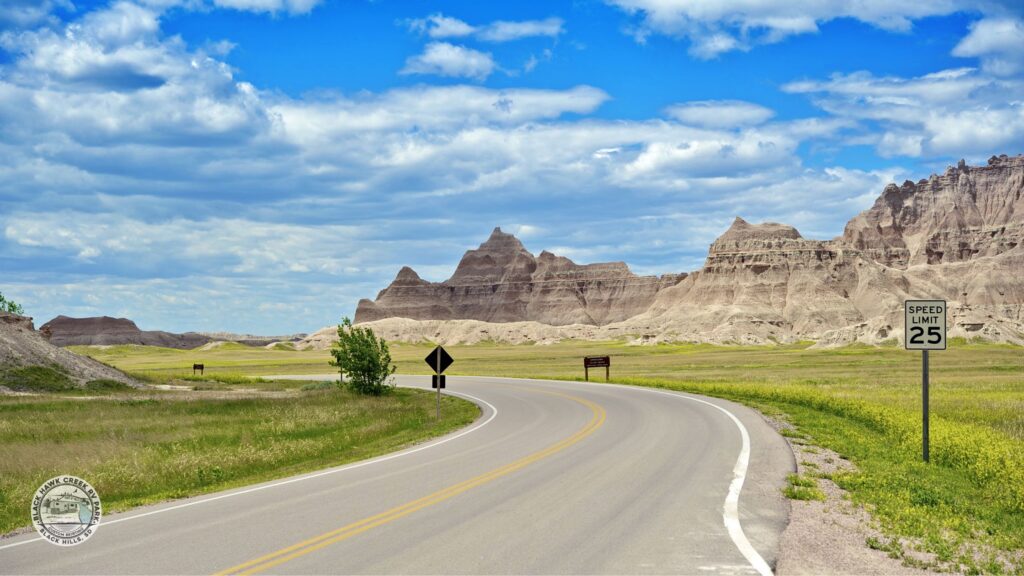
The Badlands Loop Road offers an accessible gateway to one of America’s most unique landscapes. Whether you’re making a quick detour from I-90 or planning a multi-day exploration, this 31-mile scenic byway provides unforgettable views of a terrain that seems more lunar than terrestrial.
The diversity of experiences available along the Badlands Scenic Loop makes it suitable for visitors of all interests and abilities. From easily accessible overlooks that require just a short walk from your vehicle to challenging hikes that lead you deep into the formations, the park accommodates both casual sightseers and dedicated outdoor enthusiasts.
To truly appreciate the Badlands, take time to stop at multiple overlooks, each offering a different perspective on this ancient landscape. Consider how the light changes the appearance of the formations throughout the day, and if possible, experience both sunrise and sunset within the park.
Weather conditions significantly impact your experience, so plan accordingly. The harsh extremes that shaped this landscape continue today, creating both challenges and opportunities for visitors. These same forces of erosion that carved the Badlands continue their work, meaning the landscape you see is still evolving—approximately one inch of the formations erodes each year.
The otherworldly beauty of Badlands National Park leaves an indelible impression on visitors. As you drive the Badlands Scenic Loop Road, you’re not just traversing a physical landscape but traveling through deep time, witnessing the pages of Earth’s history written in stone and experiencing a place that has inspired awe in humans for thousands of years.
Your Basecamp for Badlands Adventures
After a day exploring the dramatic landscapes of Badlands Loop Road, you deserve a comfortable place to relax and recharge. Located just 50 minutes from Badlands National Park, Black Hawk Creek RV Park & Cabins offers the perfect basecamp for your South Dakota adventures. With spacious RV sites and cozy cabins, you’ll have all the amenities you need while staying close to the region’s most iconic attractions. Whether you’re planning multiple visits to capture the Badlands in different lighting conditions or using it as a starting point to explore Mount Rushmore, Crazy Horse, and other Black Hills destinations, Black Hawk Creek provides the ideal combination of comfort and convenience. Book your stay today and make the most of your Badlands journey!